
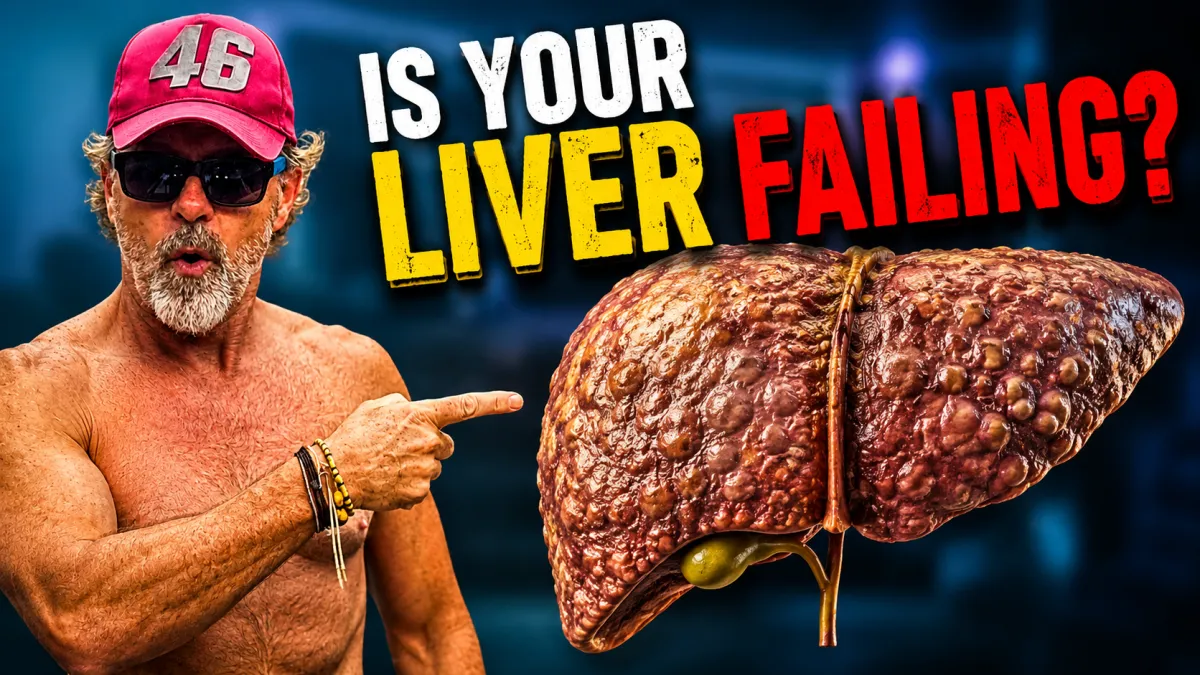
Warning Signs Your Liver May Be Struggling
At BBHC, we often remind clients that many of the body's most serious health problems do not arrive with flashing warning lights. They develop quietly, often over years or even decades, before finally becoming obvious.
The liver is perhaps one of the best examples of this phenomenon.
This remarkable organ works around the clock, performing hundreds of essential functions every day. It helps regulate blood sugar, produces bile for digestion, processes nutrients, manufactures important proteins, stores vitamins and minerals, and assists in breaking down substances that enter the body. Despite carrying out this enormous workload, the liver has an extraordinary ability to regenerate itself, even after significant damage.
The challenge is that liver dysfunction can remain largely unnoticed until it becomes advanced. Fortunately, there are often subtle clues that something may be wrong.
One of the most overlooked signs is waking up consistently between 2 a.m. and 3 a.m. Many people assume this is caused by stress or adrenal fatigue. While stress hormones are certainly involved, another possibility is poor blood sugar regulation linked to liver dysfunction.
During the night, the liver releases stored glucose to provide fuel for the brain while we sleep. If this process becomes disrupted, blood sugar levels may fluctuate more dramatically than normal. When blood sugar drops too quickly, the brain responds by triggering the release of adrenaline, a hormone designed to rapidly increase available fuel.
Unfortunately, adrenaline is also a powerful stimulant, which can leave a person suddenly wide awake in the middle of the night.
Another surprisingly common sign is pain that radiates into the right shoulder or up toward the neck. When liver function is impaired, bile flow may become sluggish. This can contribute to irritation and swelling in structures associated with the liver and gallbladder. Through nerve connections involving the diaphragm, discomfort can sometimes be felt in the shoulder rather than directly over the liver itself.
Easy bruising can also be a clue that deserves attention. The liver plays a critical role in producing proteins involved in blood clotting. When liver function declines, the body's ability to clot blood efficiently may be compromised, making bruising more noticeable.
Persistent itching, especially at night or around the feet and lower legs, is another symptom that is often misunderstood. In some cases, impaired bile flow allows bile components to accumulate in the bloodstream and eventually deposit within the skin. The result can be intense itching that seems to have no obvious explanation.
Changes in alcohol tolerance may also indicate a problem. Some individuals who previously tolerated alcohol reasonably well suddenly find that even small amounts leave them feeling unwell, inflamed, or excessively fatigued. Since the liver is heavily involved in processing alcohol, reduced tolerance can sometimes reflect declining liver efficiency.
As liver disease becomes more advanced, fluid can begin accumulating in the abdominal cavity. This condition, known as ascites, can create the appearance of a large protruding belly despite progressively thinner arms and legs. Unlike body fat, this abdominal enlargement is largely due to fluid retention. At the same time, muscle loss often accelerates because the body's ability to properly process and utilize nutrients becomes compromised.
Another serious consequence of advanced liver dysfunction involves changes in mental function. The liver normally converts ammonia and other metabolic waste products into forms that can be safely removed from the body. When this process becomes impaired, ammonia levels may rise and affect the brain.
People may experience brain fog, poor concentration, irritability, mood changes, memory difficulties, and reduced mental clarity. In severe cases, personality changes can become noticeable to family members and friends.
Perhaps one of the most important discussions surrounding liver health today involves diet. At BBHC, we frequently emphasize that many modern liver problems are closely linked to excessive consumption of refined carbohydrates and highly processed foods.
While alcohol can certainly contribute to liver disease, many individuals who rarely drink alcohol are now being diagnosed with fatty liver disease. This condition has become increasingly common alongside rising rates of obesity, insulin resistance, and type 2 diabetes.
A significant contributor appears to be the modern food environment. Processed foods often contain large quantities of refined starches, fillers, sweeteners, and additives designed to improve texture, shelf life, and profitability. Ingredients such as maltodextrin can have a very powerful impact on blood sugar despite not always being recognized by consumers as a form of sugar.
From a BBHC perspective, the goal is not simply to focus on liver health in isolation but rather to improve overall metabolic health. Supporting healthy insulin levels appears to be one of the most effective strategies for helping the liver recover.
This often begins with reducing frequent snacking, especially carbohydrate-rich snacks that repeatedly stimulate insulin release throughout the day. Replacing highly processed foods with nutrient-dense whole foods may help reduce the metabolic burden placed on the liver.
Quality protein from meat, fish, eggs, and other minimally processed foods provides important building blocks for tissue repair and maintenance. Vegetables contribute vitamins, minerals, antioxidants, and plant compounds that support overall health. Bitter greens and cruciferous vegetables have traditionally been valued for their potential role in supporting liver function.
Sleep also deserves special attention. Research increasingly demonstrates a strong connection between poor sleep and metabolic dysfunction. Chronic sleep deprivation can worsen insulin resistance, increase appetite, and place additional stress on the liver.
Choosing organic foods where practical may help reduce exposure to pesticides, herbicides, and other agricultural chemicals, further decreasing the workload placed on the body's detoxification systems.
The encouraging news is that the liver possesses an incredible capacity for recovery. Many people experience meaningful improvements in liver health when they address the underlying dietary and lifestyle factors contributing to metabolic dysfunction.
The liver is not simply another organ. It is one of the body's primary metabolic control centers. By supporting healthy blood sugar regulation, improving sleep, reducing processed food consumption, and focusing on nutrient-dense whole foods, individuals may give this remarkable organ the opportunity to do what it does best—repair, regenerate, and restore balance throughout the body.
At BBHC, we believe that understanding the root causes of health challenges is often the first step toward lasting change. When it comes to liver health, the body's warning signs may be subtle, but they should never be ignored.