
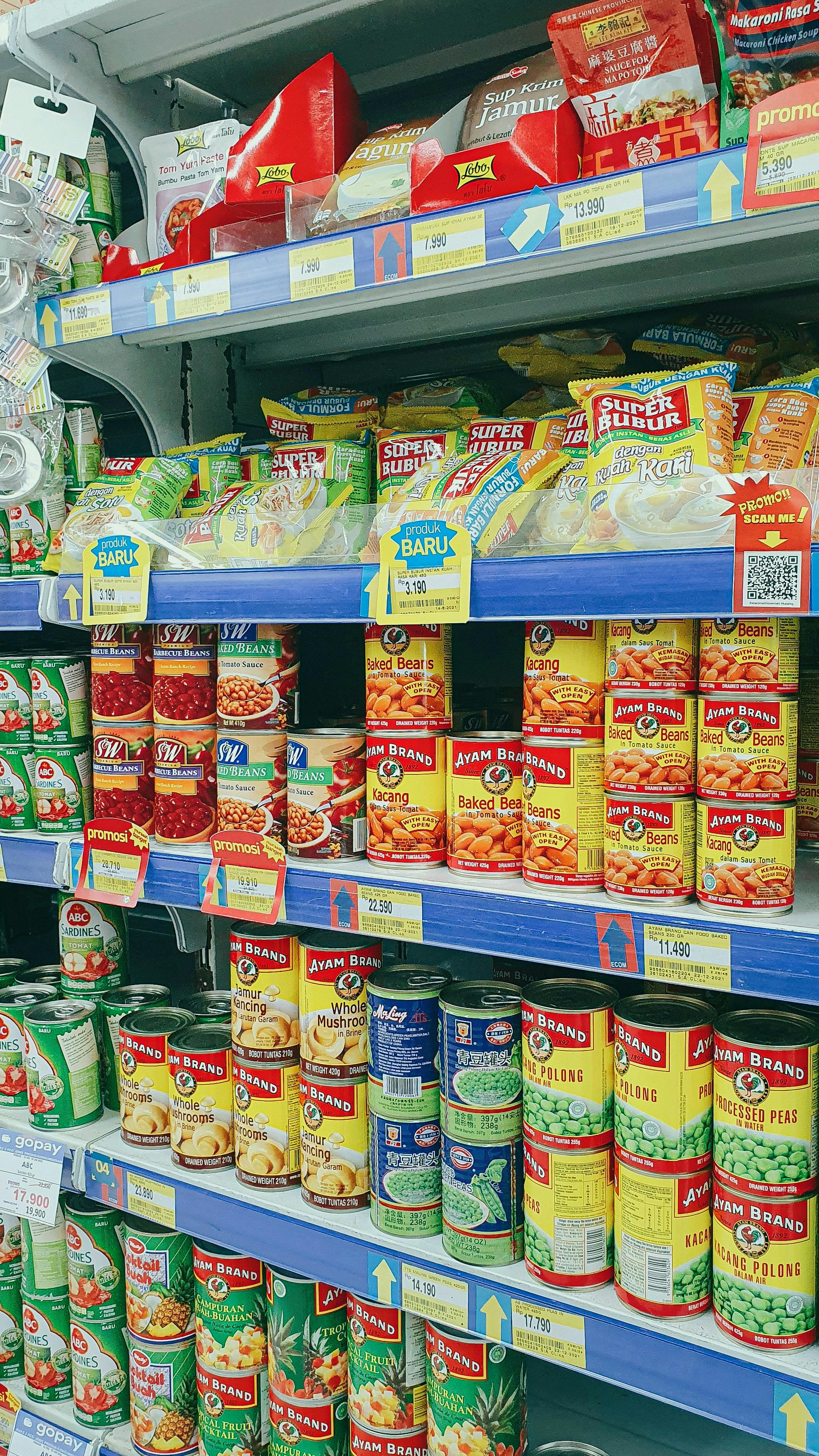
Food Labels Are Deceptive
(They’re There to Sell You Something)
If food labels were honest, half the supermarket would need a therapist and the other half would need a warning label.
Instead, we get glossy packaging whispering sweet lies like “natural,” “low-fat,” “keto-friendly,” and my personal favourite, “no added sugar.” Which is a bit like saying, “I didn’t add poison—someone else did.”
Welcome to the modern food label: a carefully engineered piece of marketing designed to look like nutrition.
The Front of the Package Is a Dating Profile
The front label is where food pretends to be something it’s not.
“Keto Friendly.”
“Low Carb.”
“Heart Healthy.”
“Light.”
“Multigrain.”
These claims are not there to inform you. They’re there to trigger trust, reduce suspicion, and get your hand moving toward the trolley.
Studies consistently show that when a product has health claims on the front, people assume it’s healthier—even if the ingredients are identical to the version without the claims. Same food. Different font. Different halo.
Rule number one at BBHC: Ignore the front of the package entirely.
It’s advertising, not education.
The Ingredient List Never Lies (But It Hopes You Don’t Read It)
The ingredient list is where the truth lives—and where Big Food hopes you never look.
Ingredients are listed by weight, from highest to lowest. That means the first three ingredients make up the majority of what you’re eating. Not the vitamins added at the end. Not the “superfood” sprinkled in for marketing. The bulk.
If the first three ingredients include:
Refined grains
Sugar (in any of its 50+ disguises)
Hydrogenated or refined seed oils
You’re not eating food. You’re eating a formulation.
Another giveaway? Length.
If the ingredient list looks like a paragraph instead of a sentence, the product has been heavily processed. Real food doesn’t need a backstory.
Serving Sizes: The Oldest Trick in the Book
Nutrition labels love math—especially when it works in their favour.
One serving might be:
Half a soda
A quarter of a cookie
Half a chocolate bar
Because technically, if you only eat half, the numbers look great.
But nobody eats half a biscuit and says, “Ah yes, that was satisfying.”
Manufacturers use unrealistically small serving sizes to shrink calorie counts, sugar grams, and fat numbers. If you want the real picture, you must multiply everything by how much you actually eat—which is usually double or triple what’s listed.
The Greatest Hits of Label Deception
Let’s decode a few favourites:
“Natural”
Means the original molecule came from nature at some point in its life. After that? It can be extracted, distilled, fermented, altered, recombined, and dissolved in industrial carriers. Still “natural.” Legally.
“Organic”
Organic sugar is still sugar. Organic junk food is still junk food—just with better PR.
“No Added Sugar”
Often means “we used fruit juice concentrate instead.” Same metabolic effect. Friendlier name.
“Low-Fat”
Almost always means higher sugar. Fat was removed, flavour was lost, sugar was invited to compensate.
“Multigrain”
Means more than one grain. Not whole grain. Not healthy. Just… many grains.
“Gluten-Free”
Does not mean healthy. It just means no wheat, rye, or barley. Many gluten-free products are refined starch bombs with bonus seed oils.
“Zero Trans Fat”
Legally allowed if it’s under 0.5 g per serving. Which brings us back to… serving sizes.
Fortified Doesn’t Mean Fixed
When a product says “fortified” or “enriched,” what it’s really saying is:
“We stripped this food of nutrients during processing, then added a few back so it looks respectable again.”
Adding vitamin D to processed food doesn’t make it healthy. It just makes it less embarrassing.
Why This Matters More Than You Think
Labels don’t just influence what you buy—they influence how much you trust what you eat.
When people struggle with:
Weight loss
Blood sugar
Inflammation
Hormonal issues
Fatigue
They often think they’re “doing everything right” because the labels told them so.
But the body doesn’t read marketing.
It responds to ingredients.
The BBHC Rule for Labels
Here’s the simple truth:
If you need a guide to understand the label, the food is probably not ideal
If the ingredients list reads like chemistry homework, skip it
If the food wouldn’t exist without a factory, question it
Real food doesn’t need clever wording.
It doesn’t need claims.
It doesn’t need redemption through fortification.
It just needs to be food.
And once you learn how to read labels properly, something interesting happens:
You stop being confused—and Big Food loses its grip.
That’s not an accident.