
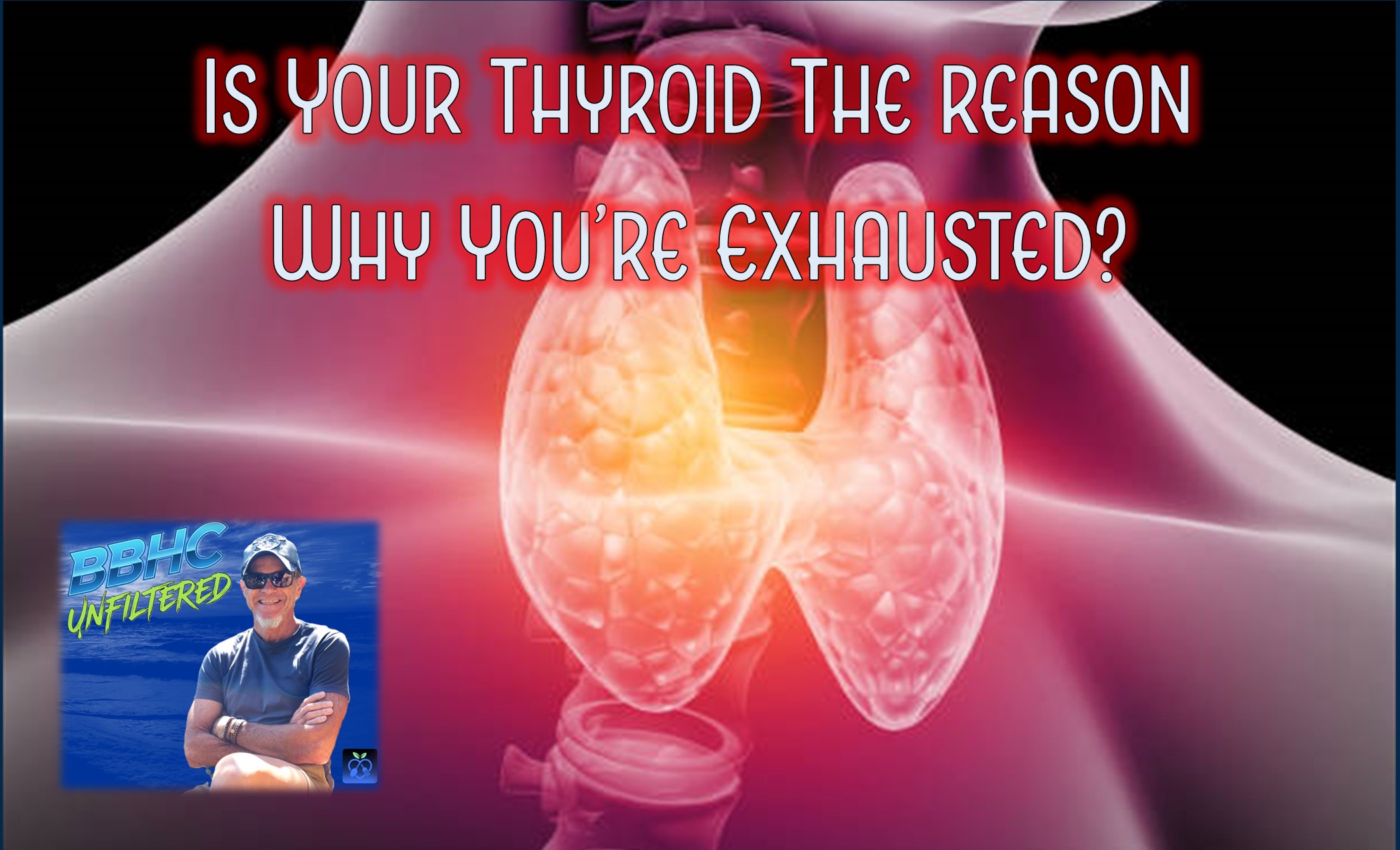
Hypothyroidism: Why So Many People Stay Tired on “Normal” Lab Results
A familiar story plays out every day. You start noticing thyroid symptoms—low energy, weight gain, feeling cold, hair thinning, a general sense that your body has lost its spark. You go to the doctor. You get the diagnosis: hypothyroidism. You’re prescribed Synthroid (or another thyroid hormone medication), and you’re told your thyroid hormones are low.
So you take the medication faithfully. Months go by. Sometimes a year. And you’re left wondering why you don’t feel much different. Your energy is still low. Your weight still isn’t moving. Your mood still feels flat.
At that point, many people ask the most important question: what caused the thyroid hormones to drop in the first place?
And too often, the answer is vague. “We don’t know.” “It might be genetic.” “Research is ongoing.”
From a BBHC perspective, this is where the entire conversation needs to change. Managing thyroid numbers is not the same as restoring thyroid function. If you treat the symptom while ignoring the upstream cause, you can keep “normal” lab values and still feel unwell. Worse, long-term replacement hormone can reduce the thyroid’s need to work, creating a dependency state where the gland becomes less active over time.
This isn’t an argument against medical care. It’s an argument for asking better questions.
The Thyroid Is Often the Messenger, Not the Main Criminal
The thyroid produces more than one hormone. It produces T4, T3, and calcitonin. Yet most treatment focuses narrowly on supplying T4. That can be helpful—but it’s incomplete if your real problem is not thyroid output, but thyroid conversion, immune attack, or metabolic dysfunction elsewhere.
One key fact changes everything: T4 is not the active hormone. It’s a precursor. The “3” and the “4” simply refer to the number of iodine molecules attached. When the body removes one iodine molecule from T4, it becomes T3—the active form that actually drives metabolism.
Here’s the catch: about 80% of that conversion happens in the liver. The remaining 20% happens in the kidneys.
So if you have a fatty liver, liver inflammation, cirrhosis, or impaired liver function, you can have adequate T4 and still suffer from low active thyroid function. And if you have kidney impairment—especially common in people with diabetes, prediabetes, or insulin resistance—the conversion process can also be compromised.
In other words, you can treat the thyroid while ignoring the liver and kidneys, and never fix the real problem.
This is exactly why BBHC fundamentals place such a heavy emphasis on metabolic health and insulin regulation. Insulin resistance doesn’t just affect blood sugar. It affects organs, inflammation, and hormonal conversion pathways—including thyroid function.
The Nutrients That Control Thyroid Conversion
The conversion from T4 to T3 requires key minerals. Selenium is essential. Zinc is also required.
If you’re deficient in selenium or zinc, you may take synthetic T4 and still fail to convert enough of it into active T3. That can lead to a frustrating scenario: labs look “fine,” but symptoms don’t improve.
This is where many people get stuck—treating numbers while living in the symptoms.
Two Hormones That Quietly Disrupt Thyroid Function
Two hormones can seriously interfere with thyroid production and conversion: estrogen and cortisol.
Estrogen plays a role in immune regulation, including T-cell activity. This is one reason many women develop thyroid issues after pregnancy. Thyroid problems can appear after an estrogen shift, and they can manifest as hypothyroidism or hyperthyroidism.
Cortisol is just as critical. When cortisol is chronically high, it can paralyze certain immune functions. That immune disruption can set the stage for autoimmune conditions, including Hashimoto’s—which accounts for roughly 90% of hypothyroid cases.
A crucial question, then, is timing. When did thyroid symptoms begin? Was it after pregnancy? Was it after a major stress event? Those clues matter because they point upstream—toward the actual trigger.
Most “Thyroid Problems” Are Actually Immune Problems
Hashimoto’s is autoimmune. It’s not simply a “low thyroid hormone” problem. It’s a situation where the immune system produces antibodies that attack thyroid tissue and interfere with function.
This is why the gut matters.
A large portion of immune activity originates in the gut. If there is gut permeability—often described as “leaky gut”—proteins can cross into tissues and provoke immune reactions. Over time, antibodies can develop against parts of the body, including the thyroid.
One major trigger repeatedly associated with thyroid autoimmunity is gluten sensitivity and gluten intolerance. Many people report significant relief when gluten is removed. From a BBHC lens, the more decisive approach is not only gluten-free but grain-free, because modern grain exposure is tightly linked with inflammation and immune activation in susceptible individuals.
Inflammation Is the Common Denominator
Autoimmune thyroid conditions are inflammatory conditions. If you reduce inflammation, you reduce damage.
One powerful modulator discussed here is vitamin D. Vitamin D functions more like a hormone than a vitamin. It acts in some ways like cortisol, but without the same side effects. High-dose vitamin D—described here as 40,000 IU—has been used to help calm inflammation in autoimmune conditions, along with selenium.
Because the majority of thyroid disorders are autoimmune-driven, inflammation control becomes central, not optional.
It also helps explain why hypothyroidism is far more common in women—reported here as about eight times more common—likely due to the estrogen-immune regulation relationship.
Early Signs of Hypothyroidism That People Miss
Hypothyroidism often begins subtly.
A classic early sign is thinning or loss of the outer third of the eyebrows. Hair may become dry and thin. Cold intolerance becomes noticeable—you can’t tolerate cold exposure for long, you dislike cold weather, and you may wear socks even in warmer months.
Metabolism can slow dramatically, sometimes overlapping with insulin resistance issues. Weight gain becomes generalized, but the “fat” may not be traditional adipose tissue. A specific type of puffiness called myxedema can occur, creating a spongy, swollen look that mimics fat gain.
Fatigue and depression are also common, because thyroid hormones influence nearly every aspect of cellular energy production and neurotransmitter balance.
A Root-Cause Plan: What to Investigate and What to Do
The first step is to determine whether the current strategy is actually working. If you’ve been taking thyroid hormones and you don’t feel normalizing effects, it’s time to ask better questions. A solution that truly fixes a problem should not require “years and years” to work. If nothing changes, the missing piece is upstream.
Several self-assessments are described here.
An iodine patch test can offer clues about iodine deficiency. A small amount of iodine (often 2%) is applied to the inside of the arm or thigh and covered. If the yellow disappears within 24 hours, it suggests deficiency. If it remains clearly visible, it suggests adequate iodine. It’s not perfect, but it can provide direction.
Another classic check is the Achilles tendon reflex test. When the tendon is tapped, the foot should rise and then return promptly. In hypothyroidism, the return action is sluggish. That delayed relaxation can indicate a primary thyroid issue.
Then comes the most important investigative question again: when did symptoms start? After pregnancy suggests estrogen involvement. After major stress suggests cortisol involvement. Evidence of fatty liver suggests liver-first intervention. In BBHC terms, the thyroid is often downstream of metabolic dysfunction.
Nutritionally, trace minerals matter. Not just iodine, but selenium and zinc—ideally through a quality trace mineral approach and whole-food sources.
Diet-wise, gluten elimination can be a game-changer, and going fully grain-free may provide more consistent immune calm.
Inflammation control is central, especially in autoimmune cases. Vitamin D and selenium are highlighted as essential tools in that context.
A further strategy mentioned is a product called Thytrophin PMG by Standard Process, taken as one before bed over a period of three months. It is described as an animal thyroid extract. The theory is that it may act as a decoy for antibodies, temporarily drawing immune attention away from the thyroid to allow recovery time. The text acknowledges this mechanism as theoretical rather than proven, but describes it as a potentially helpful strategy.
The BBHC Perspective in One Line
If you treat only the thyroid, you might manage numbers. If you fix the liver, insulin resistance, gut inflammation, nutrient status, and immune triggers, you change the entire metabolic environment that the thyroid is responding to.
That’s when people stop “living with thyroid problems” and start rebuilding function.