
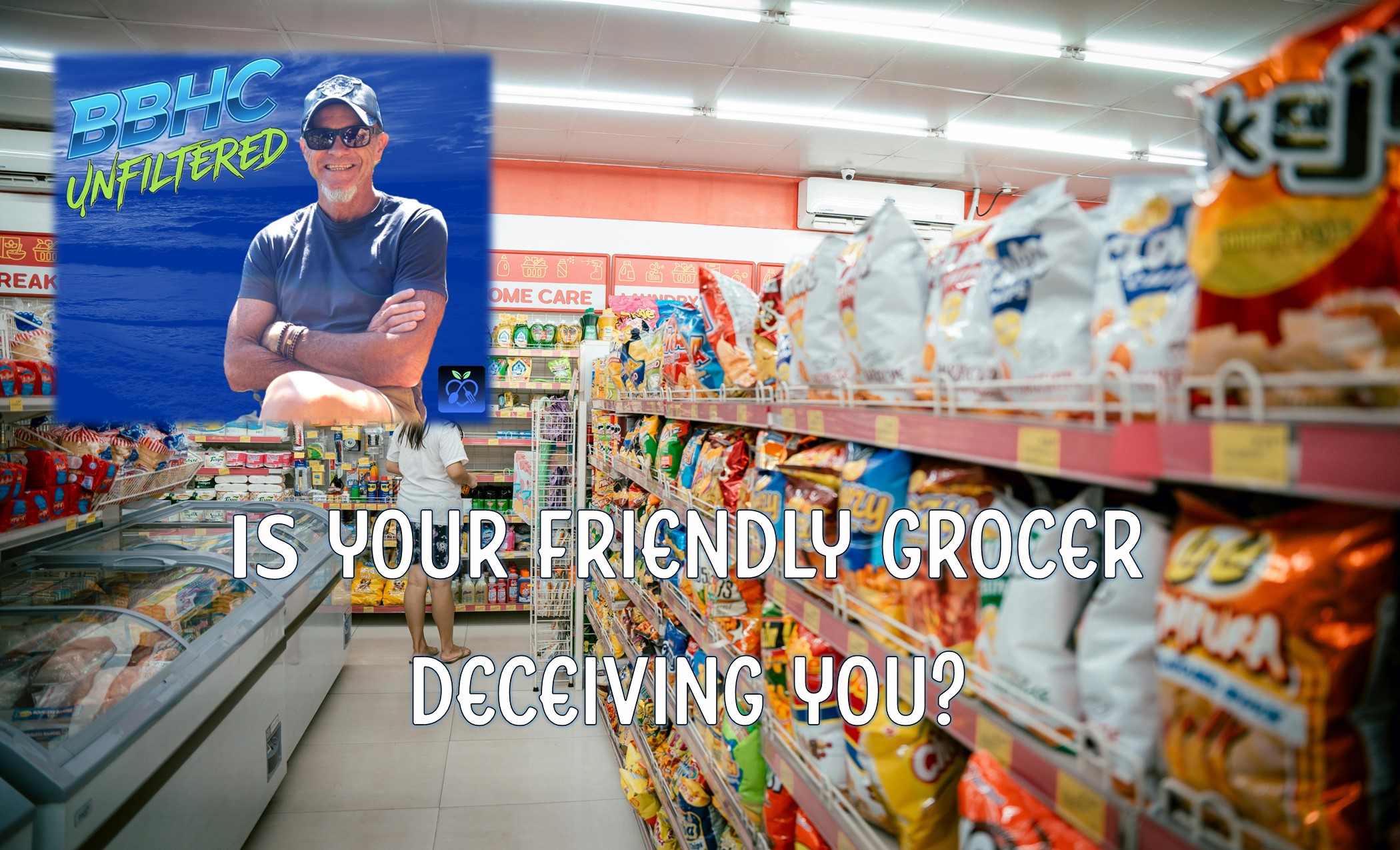
Supermarkets Are Not Neutral: How Modern Food Retail Works Against Your Health
Walk into a modern supermarket and it feels familiar, convenient, even comforting. Bright lights. Endless choice. Neatly arranged shelves promising health, value, and “natural” living.
That comfort is an illusion.
Supermarkets are not designed to improve your health. They are engineered to extract maximum profit, and human biology is simply another lever in that system. Understanding how this environment works is essential if you want to eat in a way that supports metabolic health, hormonal balance, and long-term vitality—especially within an Ancestral, whole-food framework.
Food Placement Is Not Accidental
Shelf space is not earned by quality or nutrition. It is purchased.
The most visible locations—eye-level shelves, aisle ends, and checkout zones—are premium real estate. Products placed there are not “best sellers” because people love them; they sell because they are seen repeatedly. This is how ultra-processed foods dominate perception while real food is quietly sidelined.
In contrast, foods that humans evolved to eat—fresh meat, eggs, vegetables, natural fats—are usually pushed to the edges of the store, requiring deliberate effort to access. That effort is intentional friction.
The Store Is Designed to Slow You Down
Supermarket layouts are engineered to control movement. Staples are placed far apart so you must walk past hundreds of temptations. Aisles subtly guide direction. Displays interrupt flow.
The longer you stay inside, the more likely you are to buy foods you never intended to buy—often foods that spike insulin, drive inflammation, and sabotage satiety.
From a metabolic perspective, this matters. Decisions made under cognitive fatigue tend to favor fast carbohydrates, refined starches, and sugar-fat combinations—the exact foods that disrupt blood glucose and hunger signaling.
Your Senses Are Being Manipulated
Smell, texture, and color are deliberately used to bypass rational choice.
Artificial “fresh bread” aromas stimulate appetite regardless of hunger. Flooring textures change to unconsciously speed you up or slow you down. Bright reds and yellows increase impulse behavior and perceived urgency.
None of this improves nutrition. It improves compliance.
Humans evolved to respond to sensory cues in nature—ripeness, freshness, safety. Supermarkets hijack those cues using chemistry and psychology.
Labels Are Not Truth
Words like natural, wholesome, organic, or plant-based have no consistent nutritional meaning outside very narrow regulatory definitions. A product can carry these labels while still being loaded with sugar, industrial seed oils, starches, and additives that did not exist for most of human history.
The BBHC Ancestral approach does not rely on labels. It relies on ingredients, structure, and metabolic impact.
If it requires a marketing department to explain why it’s healthy, it probably isn’t.
Social Proof Is a Sales Tool, Not a Health Signal
“Customer favorite” and “best seller” tags exploit herd psychology. They suggest safety through popularity, not biological suitability.
But metabolic disease is also popular.
Obesity, insulin resistance, fatty liver disease, and type 2 diabetes are widespread precisely because popular food choices are disconnected from human physiology.
Popularity is not evidence. Biology is.
The Checkout Trap
By the time you reach the checkout, decision fatigue is high and blood sugar is often low. This is where highly profitable, low-nutrition foods are clustered—engineered for last-minute surrender.
These items contribute disproportionately to daily sugar intake, especially in children. From a hormonal and neurological standpoint, this is not accidental; it is strategic.
How to Eat Like a Human in an Inhuman Environment
You cannot change the supermarket, but you can stop letting it control you.
An Ancestral, BBHC-aligned strategy is simple and effective:
Eat before you shop
Use a list and stick to it
Shop the perimeter where whole foods live
Prioritize real protein, natural fats, and vegetables
Ignore front-of-package claims
Read ingredients, not slogans
This is not restriction. It is self-defense.
The Bigger Picture
Modern supermarkets reflect modern disease patterns. They reward shelf stability, hyper-palatability, and repeat consumption—not health, not longevity, and certainly not metabolic resilience.
Returning to an Ancestral way of eating is not nostalgic. It is rational.
Human biology has not changed. The food environment has.
And once you see how the system works, it becomes much harder to be controlled by it.
Author:
Nick Howarth
Ancestral Diet Researcher & Global Metabolic Health Coach