
Understanding Oxalates
What They Are, Where They Are Found, and Why They Matter
A BBHC Health Guide
At Best Body Health Coaching, our goal has always been to help people return to the way the human body was designed to eat. While vegetables, nuts and seeds are often promoted as universally healthy, the truth is that not all plant foods are created equal. Some contain naturally occurring compounds that can become problematic for certain people.
One of these compounds is oxalate.
If you've ever suffered from kidney stones, unexplained joint pain, recurring urinary discomfort, or have been diagnosed with chronic kidney disease, understanding oxalates could make a significant difference to your health.
What Are Oxalates?
Oxalates (also called oxalic acid) are natural compounds produced by many plants as a defence mechanism against insects and animals.
They are completely natural—but "natural" does not always mean harmless.
When you eat foods containing oxalates, your digestive system absorbs some of them into your bloodstream. Your kidneys then filter them from your blood and excrete them in your urine.
For most healthy people this process happens without any noticeable problems.
However, when oxalate levels become too high, they can begin causing trouble.
What Happens Inside the Body?
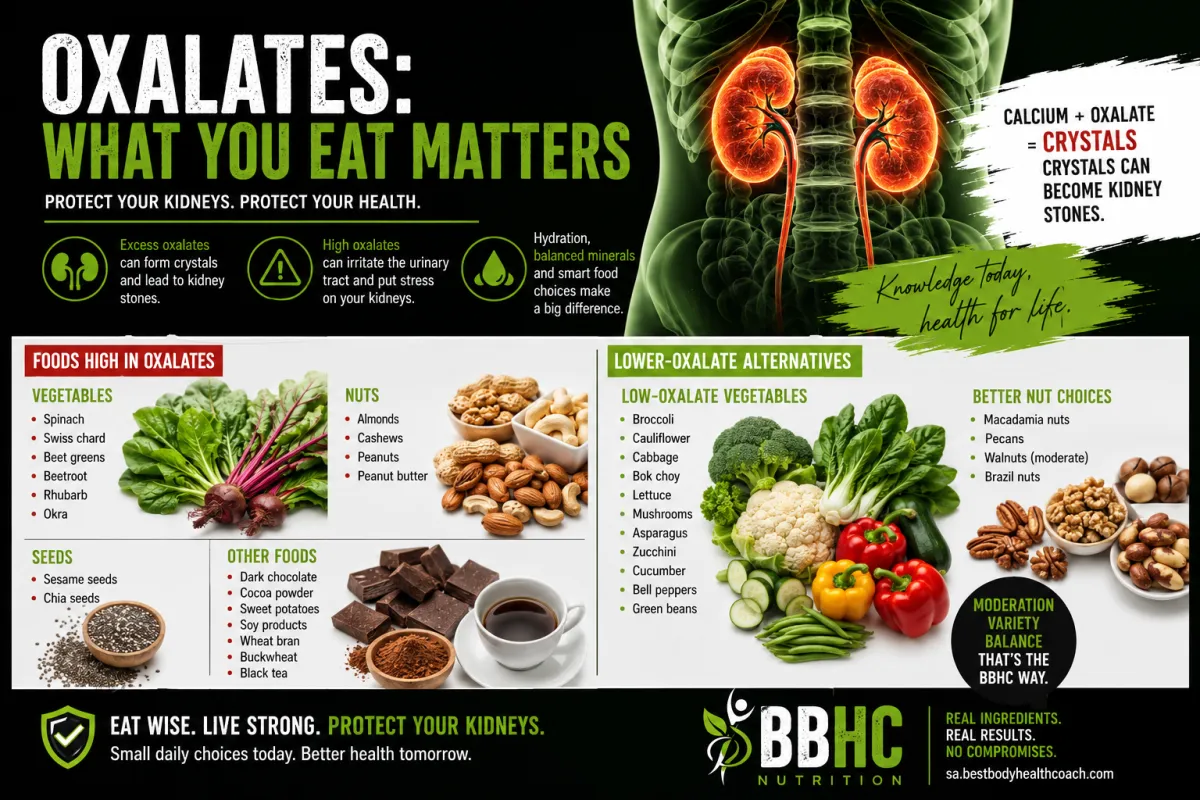
Oxalates have a strong attraction to minerals, especially calcium.
When oxalate meets calcium, it forms tiny crystals called calcium oxalate crystals.
Unfortunately these crystals don't dissolve easily.
Instead they may:
• Collect inside the kidneys
• Form kidney stones
• Irritate the urinary tract
• Contribute to inflammation
• Potentially accumulate in tissues in susceptible individuals
Oxalates and Kidney Stones
Approximately 70–80% of kidney stones are made primarily from calcium oxalate.
This does not necessarily mean calcium is the problem.
In many cases, it is the oxalate that combines with calcium to form the stone.
The crystals can grow over months or years before causing symptoms.
These symptoms may include:
Severe pain in the back or side
Pain when urinating
Blood in the urine
Frequent urination
Nausea and vomiting
Recurrent urinary tract infections
Anyone who has experienced a kidney stone knows how incredibly painful they can be.
Oxalates and Chronic Kidney Disease
If kidney function has already been reduced, removing oxalates becomes more difficult.
This can lead to:
Increased oxalate levels in the blood
Greater crystal formation
Higher risk of additional kidney injury
Increased likelihood of kidney stones
For this reason, many kidney specialists recommend that people with chronic kidney disease avoid excessive amounts of high-oxalate foods, particularly if they have a history of calcium oxalate stones.
Can Oxalates Affect Other Parts of the Body?
Research is ongoing, but some scientists believe oxalates may contribute to symptoms in susceptible individuals, including:
Joint discomfort
Muscle aches
Burning sensations
Urinary irritation
Vulvar pain in some women
Digestive discomfort
The scientific evidence for many of these symptoms is still developing, but the connection with kidney stones is well established.
Foods High in Oxalates
Some of the highest oxalate foods include:
Vegetables
Spinach
Swiss chard
Beet greens
Beetroot
Rhubarb
Okra
Nuts
Almonds
Cashews
Peanuts
Peanut butter
Seeds
Sesame seeds
Chia seeds
Other Foods
Dark chocolate
Cocoa powder
Sweet potatoes
Soy products
Wheat bran
Buckwheat
Black tea
Many of these foods are marketed as "superfoods," yet for someone prone to kidney stones or kidney disease they may become a significant source of oxalate.
Lower-Oxalate Alternatives
Fortunately, many excellent vegetables are naturally low in oxalates.
Examples include:
Broccoli
Cauliflower
Cabbage
Bok choy
Lettuce
Mushrooms
Asparagus
Zucchini
Cucumber
Bell peppers
Green beans
These vegetables provide vitamins, minerals and fibre while contributing far less oxalate.
Which Nuts Are Lower in Oxalates?
Better choices include:
Macadamia nuts
Pecans
Walnuts (moderate)
Brazil nuts (moderate)
As with any food, moderation remains important.
Can Cooking Remove Oxalates?
Boiling vegetables can reduce oxalate content because some oxalates dissolve into the cooking water.
Steaming is less effective.
Raw spinach smoothies are among the highest oxalate meals many people consume.
Drinking large spinach smoothies every day may substantially increase oxalate intake.
Should Everyone Avoid Oxalates?
No.
Healthy people with normal kidney function can usually tolerate moderate amounts of oxalate-containing foods as part of a varied diet.
However, extra caution is sensible if you:
Have had calcium oxalate kidney stones
Have chronic kidney disease
Have recurrent urinary problems
Have been advised by your healthcare provider to follow a low-oxalate diet
The BBHC View
At Best Body Health Coaching, we believe nutrition should be based on what supports human health—not simply on marketing labels.
Many people assume that because spinach, almonds or beetroot are called "superfoods," eating more is always better.
In reality, every food contains compounds that should be considered in context.
Our approach is simple:
Eat a wide variety of vegetables.
Avoid relying heavily on a handful of foods every day.
If you have kidney stones or impaired kidney function, be especially mindful of high-oxalate foods.
Choose lower-oxalate vegetables more often.
Stay well hydrated unless your healthcare provider has advised otherwise.
The goal isn't to fear vegetables—it is to choose them wisely.
Oxalates are a normal part of many plant foods, but in susceptible individuals they can contribute to kidney stone formation and place additional stress on the kidneys.
Understanding which foods are high in oxalates allows you to make informed choices that support long-term kidney health.
At BBHC, we believe that informed nutrition is powerful nutrition. By selecting foods that nourish rather than burden the body, you give yourself the best opportunity to enjoy lasting health and vitality.