
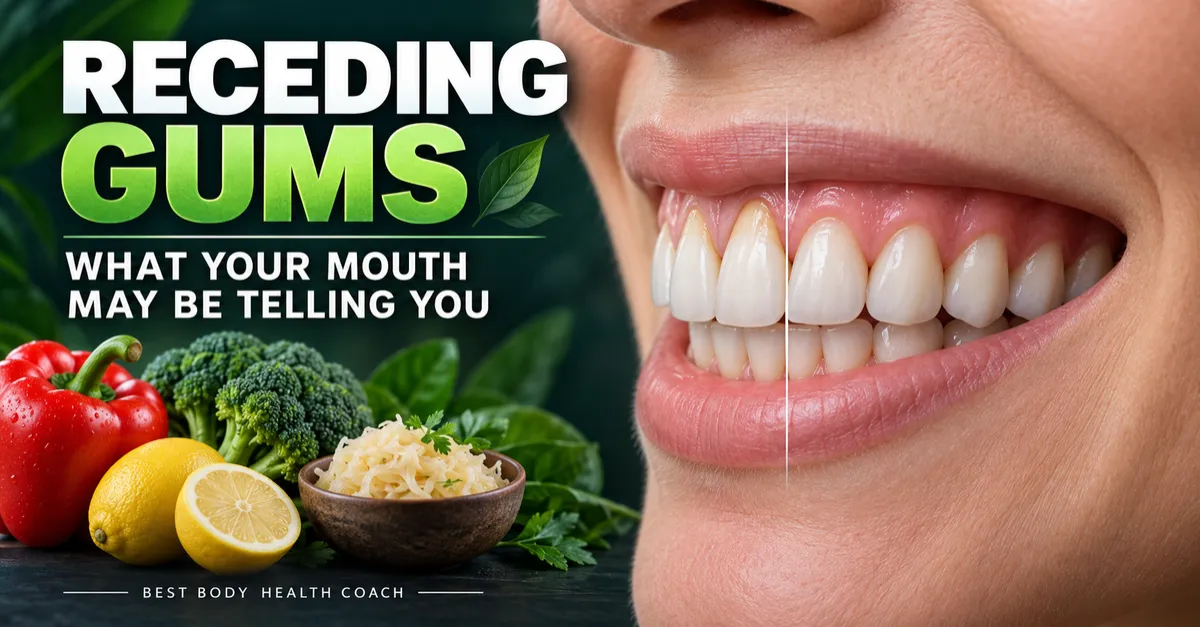
Receding Gums
The Nutritional Deficiencies and Lifestyle Factors You Should Not Ignore
Receding gums are often dismissed as an unavoidable consequence of getting older. However, age alone does not adequately explain why gum tissue begins to weaken, pull away from the teeth and lose its ability to heal.
From a Best Body Health Coach standpoint, receding gums should be treated as a warning sign. They may indicate that the body lacks the nutritional building blocks needed to maintain collagen, connective tissue, healthy blood vessels and an effective immune response inside the mouth.
The central nutrient involved is vitamin C. Other contributing factors may include a diet high in refined carbohydrates and sugar, an unhealthy oral microbiome, improper dental hygiene, smoking, metabolic disease and, in some cases, insufficient boron.
What Are Receding Gums?
Gum recession occurs when the tissue surrounding the teeth gradually wears away or pulls back. As more of the tooth or its root becomes exposed, the tooth may become increasingly sensitive and vulnerable to decay, enamel erosion, infection and structural damage.
Healthy gum tissue helps hold the teeth firmly in place. When that tissue loses strength and integrity, the teeth may eventually loosen. If the underlying problem continues, the deterioration can progress to periodontal disease, tooth loss and even loss of supporting jawbone.
Warning Signs of Gum Recession
Signs that gum health may be deteriorating include:
Red, swollen or tender gums
Gums that bleed
Teeth that appear longer
Sensitivity to hot or cold foods and drinks
Plaque accumulating along the gumline
Persistent bad breath
Loose teeth
Gum recession can develop slowly, making it easy to overlook until a considerable amount of tissue has already been affected.
The Vitamin C Connection
Vitamin C is essential for the production of collagen. Collagen provides strength and structure to the connective tissues that form and support the gums.
Without sufficient vitamin C, the body cannot maintain collagen effectively. Gum tissue may weaken, healing may slow, and the small blood vessels within the gums may become more fragile. This can contribute to bleeding, inflammation and recession.
Vitamin C also performs several related functions:
It supports the structural integrity of gum tissue.
It helps maintain healthy blood vessels that deliver oxygen and nutrients to the gums.
It supports wound healing and natural tissue repair.
It acts as an antioxidant, helping protect gum tissue from oxidative stress.
It helps regulate inflammation that could otherwise contribute to tissue breakdown.
A person does not necessarily need to have full-blown scurvy to experience gum problems related to insufficient vitamin C. Subclinical scurvy refers to a less severe, often unrecognised deficiency that may still interfere with collagen production and tissue repair.
Receding or bleeding gums may therefore be an early indication that vitamin C intake or utilisation is inadequate.
Sugar Makes the Problem Worse
A diet containing frequent sugar, refined carbohydrates and highly processed foods can contribute to gum problems in several ways.
Glucose and vitamin C are structurally similar and compete for entry into cells. Continually elevated glucose can therefore interfere with the effective utilisation of vitamin C. A person may consume some vitamin C while still failing to obtain its full cellular benefit if the diet remains dominated by sugar and refined carbohydrates.
Frequent sugar consumption also encourages an imbalance in the microorganisms living inside the mouth. Harmful bacteria can multiply, while the protective microbial balance deteriorates. This increases the likelihood of plaque, gingivitis, gum irritation, inflammation and tissue breakdown.
A high-carbohydrate processed diet can also promote systemic inflammation and poor metabolic health, further weakening the body’s ability to maintain and repair gum tissue.
This is why simply taking vitamin C without correcting the diet may produce disappointing results. The body needs vitamin C, but it also needs the metabolic environment in which that vitamin can be used effectively.
The Best Food Sources of Vitamin C
Many fruits contain vitamin C, but they can also contain significant amounts of sugar and acid. Frequent consumption may therefore create additional concerns for tooth enamel and dental health.
Better low-sugar sources include:
Bell peppers
Raw sauerkraut
Lemons and limes
Kale
Broccoli
Brussels sprouts
Spinach
Tomatoes
Berries
Kiwi
Other leafy green vegetables
Vitamin C is water-soluble and vulnerable to heat and processing. Extensively cooking or boiling vegetables can significantly reduce their vitamin C content. Which is why we, at BBHC recommend our Kale Shake and Sauerkraut daily.
Whenever practical, vitamin C-rich vegetables should be eaten raw, lightly steamed or gently sautéed. Raw sauerkraut is particularly useful because it provides vitamin C while also supporting a healthier microbial environment.
Why the Entire Diet Must Change
Supporting gum repair requires more than adding one supplement while continuing with the same damaging foods.
A nutrient-dense, low-carbohydrate diet should replace refined carbohydrates, added sugars and ultra-processed foods. This approach helps reduce inflammation, oxidative stress and frequent glucose elevations while providing the nutrients required for tissue maintenance.
The dietary foundation should emphasise:
Large quantities of nutrient-dense vegetables
Low-sugar sources of vitamin C
Moderate amounts of high-quality protein
Healthy natural fats
Fermented foods such as raw sauerkraut
The removal of sugar, refined carbohydrates and processed foods
This provides the raw materials needed for collagen formation while removing dietary factors that may be contributing to gum inflammation and microbial imbalance.
Do Not Damage the Gums While Trying to Clean Them
Dental hygiene is important, but more force is not necessarily better.
Hard-bristled toothbrushes, aggressive brushing and forceful flossing can irritate and erode gum tissue. Over time, this repeated mechanical damage may contribute to recession along the gumline.
The objective is to remove plaque without continually injuring the tissue. Brushing and flossing should be regular but gentle. If the gums are already inflamed, bleeding or receding, attacking them with a hard brush is not “deep cleaning.” It is simply adding physical damage to tissue that is already struggling to repair itself.
The Oral Microbiome
The mouth contains a large community of microorganisms. Problems develop when this community becomes imbalanced and harmful organisms begin to dominate.
Several factors can contribute to this imbalance:
Frequent sugar consumption
Chronic inflammation
A weakened immune system
Reduced saliva production
Poor dietary habits
An unhealthy oral microbiome can increase the risk of plaque formation, gum infections, gingivitis and progressive tissue breakdown.
Reducing sugar and processed carbohydrates is therefore important not only for blood glucose and inflammation but also for changing the environment in which
undesirable oral bacteria thrive.
Smoking and Gum Repair
Smoking is a major contributor to gum deterioration. It impairs immune function, promotes inflammation, disrupts the oral microbiome and interferes with healing.
Continuing to smoke while attempting to repair damaged gums works directly against the body’s recovery mechanisms. Gum tissue cannot rebuild effectively when blood flow, immunity and tissue healing remain compromised.
Metabolic and Circulatory Conditions
Bleeding and receding gums may also occur alongside metabolic or circulatory problems, including diabetes and cardiovascular disease.
These conditions may reduce effective blood flow to gum tissue and interfere with healing. Poor glucose control can also aggravate inflammation and disturb the oral microbial balance.
When gum recession occurs together with blood-sugar problems, circulatory symptoms or repeated infections, the broader metabolic condition must be addressed rather than viewing the gums as an isolated problem.
The Possible Role of Boron
Insufficient boron has also been identified as a possible contributor to receding gums.
Boron is involved in the regulation and utilisation of minerals, including calcium, magnesium and phosphorus. A deficiency may be associated with abnormal calcium distribution, including calcium being deposited in places where it is not wanted rather than being properly utilised in bones and supporting structures.
The same deficiency pattern has been associated with receding gums, joint problems, kidney stones and calcium deposits in arteries and joints.
Boron should therefore be considered as another possible nutritional factor, particularly when gum recession occurs alongside signs of disrupted calcium
metabolism. However, vitamin C remains the primary nutrient emphasised for collagen, blood-vessel integrity and direct gum-tissue support.
A Practical Gum-Support Protocol
The nutritional and lifestyle approach can be summarised as follows:
Remove added sugar, refined carbohydrates and processed foods.
Follow a nutrient-dense, low-carbohydrate Healthy Keto eating plan.
Increase low-sugar, vitamin C-rich vegetables and fermented foods.
Eat suitable vitamin C foods raw or lightly cooked whenever possible.
Support a healthier oral microbiome by reducing the foods that feed harmful bacteria.
Brush and floss regularly but gently.
Avoid hard-bristled toothbrushes and aggressive brushing.
Stop smoking.
Address blood-sugar, circulatory and metabolic problems.
Consider whether inadequate boron may also be contributing.
Have persistent recession, loose teeth, bleeding or recurrent infections professionally assessed.
How Quickly Could the Gums Improve?
The time required to notice changes depends on the severity of the recession, the person’s diet and their general health.
When insufficient vitamin C is a significant factor, improvements in bleeding, inflammation and overall gum condition may be noticed within approximately two to four weeks of consistent dietary correction.
The objective is to strengthen the remaining tissue, support collagen formation, improve healing and prevent continued deterioration. Results will vary according to the degree of existing damage and whether the underlying causes have
genuinely been corrected.
In a Nutshell
Receding gums should not be written off as merely another inconvenience of ageing.
They may indicate subclinical vitamin C deficiency, weakened collagen, fragile blood vessels, chronic inflammation, excessive sugar consumption, oral microbial imbalance, improper brushing, smoking, metabolic disease or inadequate boron.
The foundation of gum support is to restore sufficient vitamin C from low-sugar, nutrient-dense foods while removing sugar, refined carbohydrates and processed foods. Gentle oral hygiene, smoking cessation and correction of underlying metabolic problems are equally important.
The body cannot repair tissue without the correct raw materials—and it cannot repair efficiently while the source of the damage remains in place.