
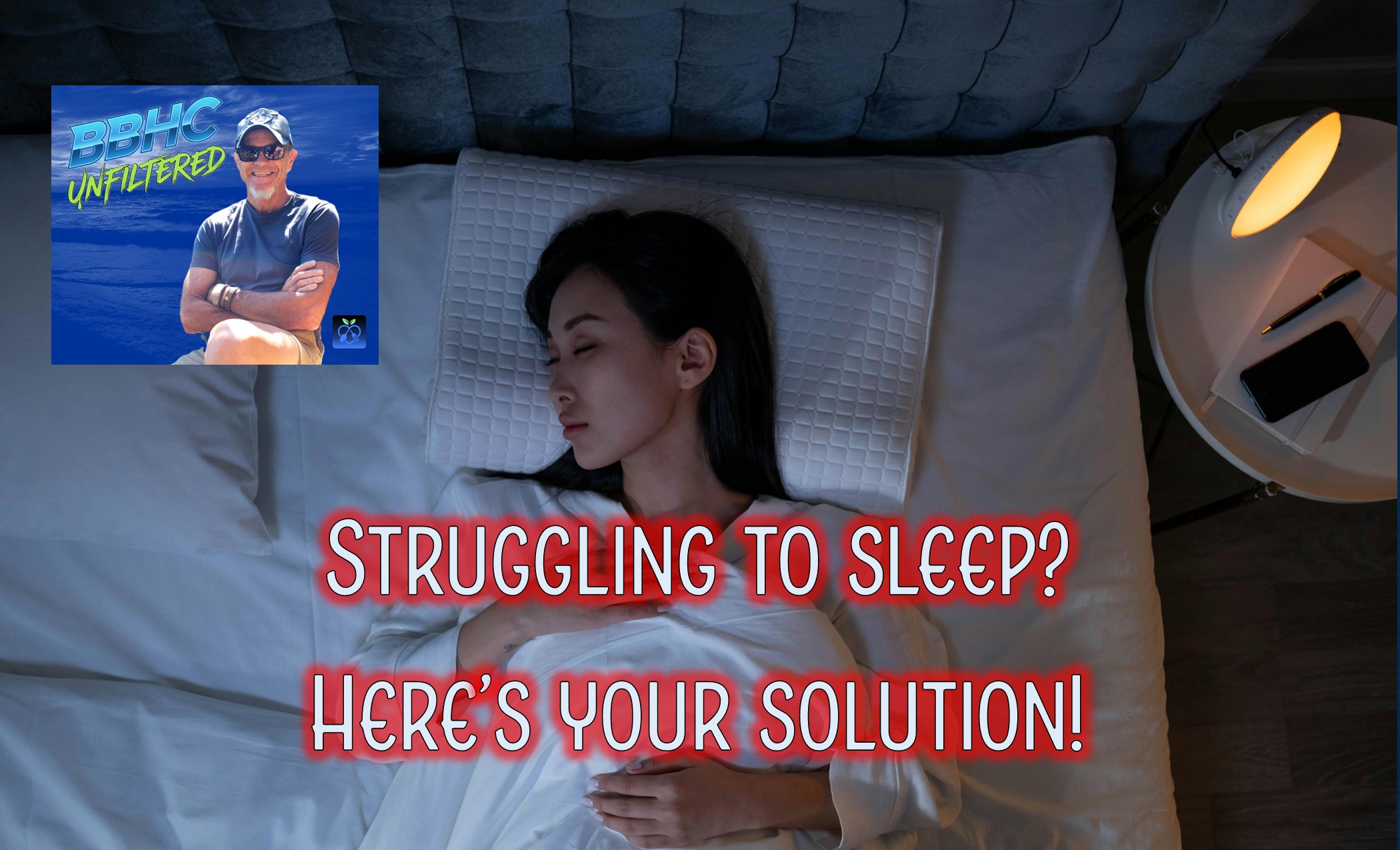
Mastering Your Sleep: The Missing Link in Real Health
There’s a hard truth most people don’t want to hear: you cannot out-supplement, out-diet, or out-train poor sleep.
You can eat perfectly. You can exercise like an athlete. You can take every supplement under the sun. But if your sleep is broken, shallow, or inconsistent, your body is operating at a deficit from the moment you wake up. Recovery slows, hormones drift out of balance, and energy becomes something you chase rather than something you naturally have.
Sleep isn’t just part of health. It is the foundation.
At BBHC, the focus is always on restoring the body’s natural rhythm, and sleep sits right at the center of that. When sleep is dialed in, everything else becomes easier—fat loss, mental clarity, mood stability, and physical performance. When it’s not, everything becomes a grind.
The problem is that most people approach sleep as if it’s something that just “happens” at the end of the day. In reality, sleep is something you build—hour by hour, habit by habit, from the moment you wake up.
It starts with what you eat and, more importantly, when you eat it.
Late-night eating is one of the most common disruptors of sleep quality. Digestion is an energy-demanding process, and when the body is busy processing food late into the evening, it simply doesn’t shift fully into repair mode. The result is lighter, more fragmented sleep. Moving your final meal earlier in the day allows the body to wind down properly, shifting from digestion into recovery.
Then there’s the role of carbohydrates. High carbohydrate intake, especially later in the day, can destabilize blood sugar and deplete key nutrients like vitamin B1. That depletion can show up as nervous tension, restlessness, and even that frustrating inability to switch off at night. A low-carb approach, combined with intermittent fasting, doesn’t just support fat loss—it stabilizes the internal environment that allows sleep to deepen.
But sleep isn’t only about food. It’s about chemistry.
Your body produces serotonin, which eventually converts into melatonin—the hormone that regulates your sleep-wake cycle. That process doesn’t happen in isolation. It depends heavily on gut health. Supporting the microbiome with targeted probiotics can have a direct impact on sleep quality, because a well-functioning gut contributes to more stable neurotransmitter production. When that pathway is working properly, sleep becomes less of a battle and more of a natural progression.
Then we step into the environment, and this is where modern life really starts to work against us.
The human body is designed to sleep in darkness and cool conditions. Yet most people go to bed in artificially lit, overheated rooms while staring at blue-light screens right up until the moment they try to fall asleep. It’s the biological equivalent of hitting the accelerator and the brake at the same time.
Light, especially blue light, suppresses melatonin production. Darkness stimulates it. It’s that simple. Exposure to natural light during the day—particularly in the late afternoon as the sun softens—helps set the internal clock. Removing artificial light in the evening allows that clock to function properly.
Temperature plays a similar role. The body needs to cool down to enter deeper stages of sleep. A slightly cooler room supports that process, while a warm environment can keep the body in a lighter, less restorative state. Something as simple as warming the feet while keeping the core cool can help the body regulate itself more effectively.
And then there’s noise—or the lack of it.
Absolute silence might sound ideal, but for many people it’s unnatural. The brain is wired to respond to subtle environmental cues. A consistent background sound, like white noise, can create a stable auditory environment that allows the nervous system to relax rather than stay on alert.
Once the environment is set, the next step is to shift the body itself.
Most people go from full speed to full stop and expect sleep to just happen. It doesn’t work that way. The body needs a transition phase. Gentle stretching before bed signals to the nervous system that it’s time to downshift. Muscles relax, tension dissipates, and the body begins to move into a parasympathetic state—the state where recovery actually happens.
Breathing plays a critical role here. Slow, controlled breathing through the nose, especially with a longer exhale than inhale, has a powerful calming effect on the nervous system. It’s one of the fastest ways to switch the body out of stress mode and into recovery mode.
Even sleeping position can influence sleep quality. Starting on the right side can reduce pressure on the heart and improve comfort, particularly if there’s any underlying digestive or liver-related stress. It’s a small adjustment, but sometimes the smallest levers create the biggest shifts.
Then come the minerals—the often-overlooked drivers of relaxation.
Sodium and potassium are not just hydration tools; they are deeply involved in nerve function and stress regulation. When sodium levels are too low, cortisol can rise. Elevated cortisol at night is a recipe for poor sleep. Ensuring adequate salt intake helps stabilize that response, while potassium supports a steady heart rate and acts as a natural relaxant.
Magnesium, particularly in glycinate form, is one of the most reliable ways to calm both the body and the mind. It relaxes muscles, supports nervous system balance, and prepares the body for deeper sleep. Taken before bed, it often makes the difference between tossing and turning and actually drifting off.
Even scent has a role to play. Certain essential oils, like spikenard and vetiver, have natural sedative properties. They don’t force sleep—they create the conditions for it.
And finally, there’s the mental side.
Most people lie in bed and think they’re relaxing, when in reality they’re running through tomorrow’s problems, replaying today’s conversations, or mentally planning their next move. That’s not relaxation. That’s low-grade stress.
Real decompression happens when you step out of your head entirely. Physical, tactile activities—gardening, walking, building something with your hands—have a grounding effect that mental exercises simply can’t replicate. They pull you out of the noise and back into the present moment.
When you combine all of this, something shifts.
Sleep stops being something you chase and starts becoming something you allow.
Because the truth is, your body already knows how to sleep. It just needs the right environment, the right inputs, and the right signals to do what it was designed to do.
At BBHC, the goal is never to force the body—it’s to remove the interference.
Do that consistently, and sleep takes care of itself.