
The Quiet Signal on Your Skin
What Skin Tags May Be Telling You About Your Metabolism


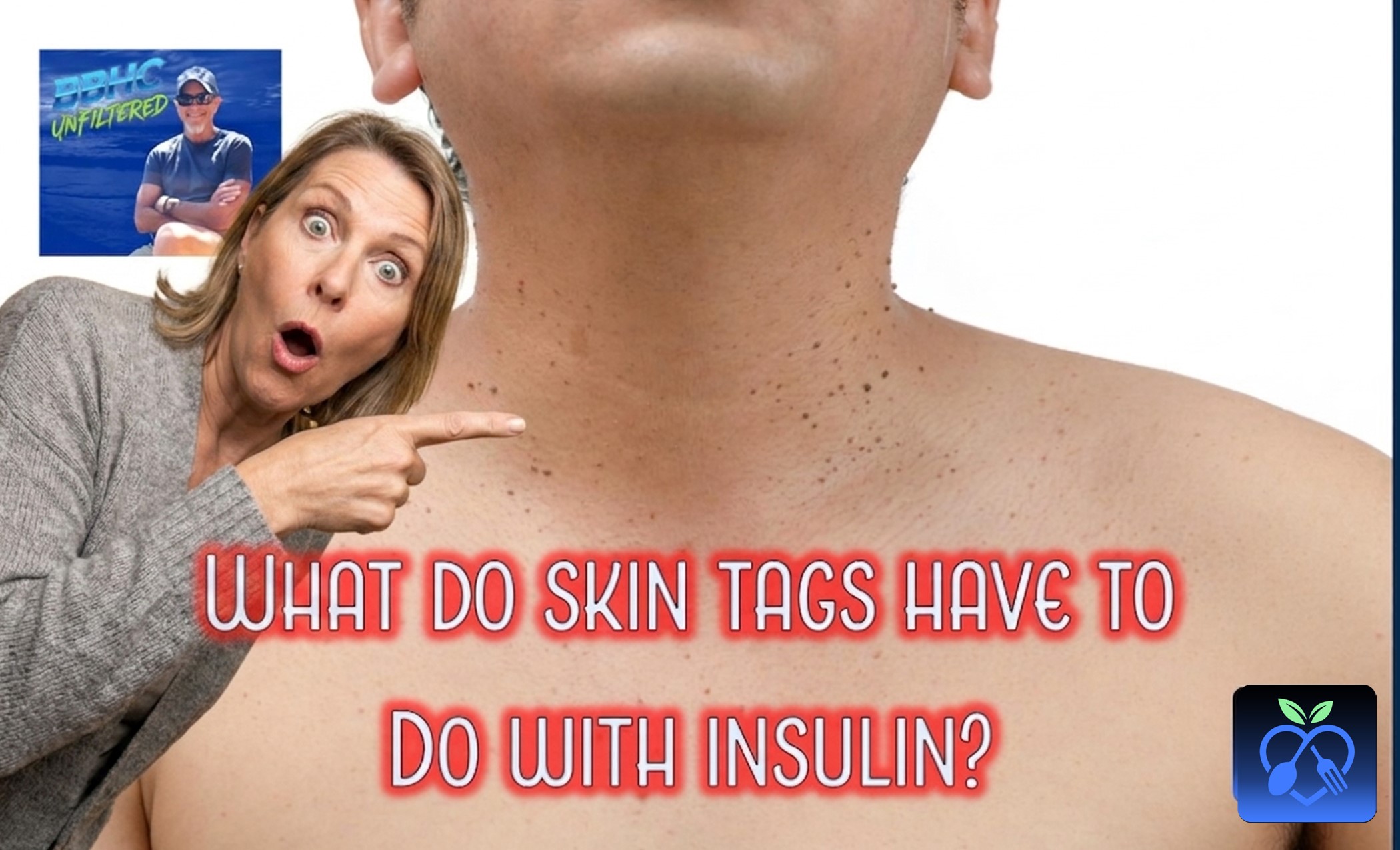
There are certain signs the body gives that most people dismiss as cosmetic inconveniences. Skin tags fall squarely into that category. Small, soft growths that appear on the neck, under the arms, around the eyes, or in the groin are often ignored, removed, or covered up. Yet these seemingly harmless protrusions—medically known as Acrochordons—may be pointing to something far more significant happening beneath the surface.
The tag itself is not the problem. It is the messenger.
To understand skin tags properly, one has to step away from the surface and look at what is happening internally. The body rarely produces visible changes without reason. When it does, it is often reflecting deeper metabolic disturbances. In the case of skin tags, the most consistent underlying pattern is insulin resistance.
Insulin resistance is not an overnight event. It is a slow, progressive shift in how the body responds to insulin, the hormone responsible for regulating blood sugar. Over time, cells become less responsive, forcing the body to produce more insulin to compensate. This state—often referred to as hyperinsulinemia—can exist for years before standard blood sugar tests show anything abnormal.
This is where many people are misled. A normal fasting glucose reading does not rule out metabolic dysfunction. In fact, it often masks it. During the early stages, commonly labeled as prediabetes, insulin levels are already elevated, but blood sugar remains within a “normal” range. Without measuring fasting insulin or calculating markers such as insulin resistance indices, this condition can go undetected for years.
During this time, the body is already under metabolic strain. Skin tags may be one of the earliest visible signs.
The connection lies in how elevated insulin affects growth signals in the body. High insulin levels stimulate the production of insulin-like growth factor 1, a hormone that promotes cellular growth and proliferation. This process increases collagen production and encourages the formation of small, benign skin growths. Over time, as hormonal imbalances deepen—often involving elevated insulin, leptin, and cortisol—the environment becomes increasingly favourable for the development of these tags.
This explains why individuals with skin tags often go on to develop conditions such as type 2 diabetes, hypertension, gout, or fatty liver disease. These conditions are not isolated; they are different expressions of the same underlying metabolic dysfunction. In many cases, the skin tags appear long before any formal diagnosis is made.
The origin of this dysfunction is rarely mysterious. It is most commonly linked to dietary patterns that drive repeated spikes in blood sugar and insulin. Diets high in refined carbohydrates, processed foods, cereals, grains, and industrial seed oils place continuous demand on the insulin system. Over time, this leads to the breakdown of normal metabolic control.
Attempts to treat skin tags at the surface level miss this entirely. While medical procedures can remove them, they do nothing to address the internal environment that caused them to form. Oils, creams, and topical remedies may alter appearance temporarily, but they do not resolve the underlying issue.
The real intervention begins with correcting the metabolic imbalance. This means addressing diet at its core—removing the inputs that drive insulin dysfunction and restoring conditions that allow the body to regain sensitivity. When the internal environment improves, the signals that led to skin tag formation are reduced.
Skin tags are not dangerous in themselves. But ignoring what they represent is where the real risk lies. They are, in many cases, an early warning system—one that appears quietly, without pain, and often without urgency.
The message is simple, even if it is uncomfortable. The body adapts to what it is consistently given. When that input drives dysfunction, the signs will eventually show. Whether those signs are ignored or acted upon determines what comes next.