
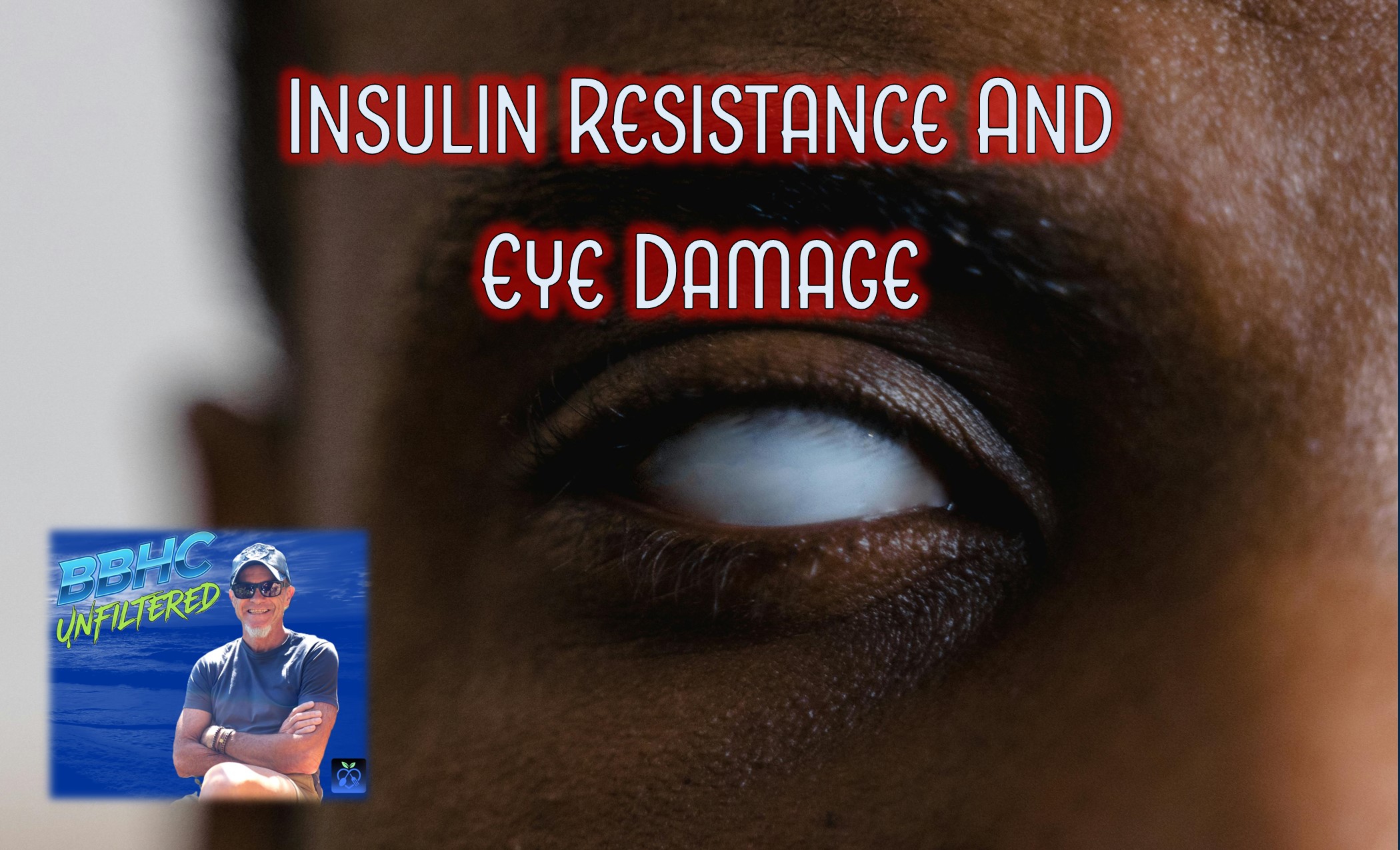
How Constant High Blood Glucose Damages the Retina — And What You Can Do About It
Blindness rarely happens overnight. In most cases, it develops quietly, gradually, and predictably. One of the most common causes of vision loss worldwide is damage from chronically elevated blood glucose. Not a single sugary meal. Not a dessert on a birthday. But sustained, repeated, elevated glucose over years.
The eyes are often described as windows to the soul. Biologically speaking, they are also windows into metabolic health.
When blood sugar remains high for prolonged periods, the retina — the delicate, light-sensitive tissue at the back of the eye — begins to deteriorate. The process is called diabetic retinopathy, but the underlying mechanism is not mysterious. It is metabolic.
To understand how blindness develops, you have to understand what high glucose actually does inside the body.
The Retina: A Metabolic Powerhouse
The retina is one of the most metabolically active tissues in the body. It requires a constant, stable supply of oxygen and nutrients. Its tiny blood vessels are extraordinarily delicate. That is both its strength and its vulnerability.
When blood glucose levels rise frequently and remain elevated, several damaging processes begin simultaneously.
First, glucose binds to proteins in a process called glycation. Over time, this produces advanced glycation end products (AGEs), which stiffen and damage tissues. In the retina, these AGEs weaken the small capillaries that nourish retinal cells.
Second, high glucose increases oxidative stress. Excess glucose overwhelms cellular pathways and generates reactive oxygen species. These molecules damage cellular membranes, mitochondrial DNA, and structural proteins within the retina.
Third, elevated insulin and glucose promote chronic inflammation. Inflammatory signaling further injures the fragile blood vessels of the eye.
Fourth, high blood sugar disrupts the polyol pathway, converting excess glucose into sorbitol. Sorbitol accumulates inside cells, drawing in water and causing cellular swelling and dysfunction.
The result is microvascular damage.
What Happens as Damage Progresses
As retinal capillaries weaken, they begin to leak. Small hemorrhages may form. Fluid seeps into retinal tissue. Vision becomes blurry.
In response to poor circulation, the body attempts to compensate by forming new blood vessels. Unfortunately, these new vessels are fragile and abnormal. They rupture easily, leading to bleeding inside the eye.
Scar tissue can form. The retina may detach.
Eventually, without intervention, vision can be permanently lost.
This is not an eye disease in isolation. It is a metabolic disease expressed in the eye.
Why “Normal” Blood Sugar Isn’t Always Safe
Many people believe that as long as their fasting glucose is “within range,” they are protected. But retinal damage is not driven by isolated readings. It is driven by cumulative exposure to glucose over time.
Hemoglobin A1c, which reflects average glucose over three months, often tells the deeper story. The higher the A1c, the greater the glycation stress placed on delicate tissues like the retina.
The retina does not tolerate glucose swings well. Repeated spikes, even if followed by drops, create oxidative stress and vascular instability.
Constant snacking, high-carbohydrate meals, sugary beverages, and refined starches maintain elevated insulin and glucose for much of the day. That persistent exposure accelerates degeneration.
The Ancestral Reality
For most of human history, chronically high blood sugar did not exist. Our ancestors did not have access to refined carbohydrates, sugary drinks, or constant food intake.
Glucose was intermittent. Insulin rose and fell appropriately. The body ran primarily on fat and ketones between meals.
The Homo sapiens design is not built for permanent glucose elevation.
When we deviate from that ancestral pattern, disease follows.
The BBHC Approach: Correct the Root Cause
At BBHC, the focus is not on masking symptoms. It is on correcting metabolic dysfunction at its root.
The primary goal is simple: stabilize blood glucose and lower insulin.
Following the BBHC ancestral protocol means removing refined carbohydrates and sugars, eating real whole foods, and allowing insulin levels to drop through structured fasting.
Skipping breakfast strategically is one of the most powerful tools in this process. When you extend the fasting window, insulin decreases. Blood sugar stabilizes. The body shifts toward fat metabolism. Oxidative stress reduces.
Lower insulin also improves vascular function. Endothelial cells — the lining of blood vessels — recover more effectively when not constantly exposed to glucose spikes.
Over time, this metabolic reset reduces further damage to the retina.
Can Retinal Damage Be Reversed?
If damage is advanced and structural destruction has occurred, full reversal may not be possible. But if the damage is early or moderate, improving metabolic health can significantly slow progression and, in some cases, improve function.
When blood sugar stabilizes:
Oxidative stress decreases.
Inflammation reduces.
Capillary leakage improves.
New vessel formation slows.
The body has remarkable repair capacity when the assault stops.
Many individuals who adopt a strict ancestral-style metabolic program see improvements in vision clarity and stabilization of retinal findings, provided the disease has not progressed too far.
The key is timing. The earlier the intervention, the better the outcome.
Healthy Fats and Retinal Health
The retina is composed of delicate fatty structures. It requires healthy fats to function properly. The BBHC protocol emphasizes natural fats such as grass-fed butter, fatty fish, egg yolks, olive oil, and avocado.
These provide omega-3 fatty acids and fat-soluble vitamins essential for retinal integrity.
In contrast, inflammatory seed oils embed into cell membranes and increase oxidative damage, further weakening vascular structures.
Protect the membranes, and you protect the retina.
The Bigger Picture
Blindness from high blood glucose is not a random event. It is the predictable result of long-term metabolic stress.
It begins silently. It progresses gradually. It accelerates with continued glucose exposure.
But it can be slowed — and in early stages, potentially improved — by returning to metabolic principles that align with human biology.
The BBHC ancestral approach is not extreme. It simply restores the environment your body was designed for.
Stable glucose. Lower insulin. Real food. Structured fasting. Healthy fats.
When you correct the metabolic foundation, the eyes — like every other organ — benefit.
Your vision depends on your metabolism.
Protect one, and you protect the other.