
Joint Pain, Arthritis and the Missing Link in Gut Health
Arthritis is often viewed as an unavoidable consequence of aging. Many people accept stiff knees, aching hips, painful fingers, and chronic joint inflammation as simply part of getting older. However, emerging research suggests that the story may be far more complex. At BBHC, we believe that understanding the root causes of disease is often more valuable than simply treating symptoms, and when it comes to joint health, the relationship between the gut, the liver, bile production, nutrition, and inflammation deserves much closer attention.
When we think about joints, we naturally focus on cartilage, bones, tendons, and ligaments. Yet deep inside every cartilage cell is a sophisticated manufacturing system responsible for producing and maintaining healthy tissue. Within these cells is a structure known as the endoplasmic reticulum, which functions like a microscopic factory. One of its primary jobs is to correctly fold proteins into the shapes required for normal function.
When this system becomes stressed, a process known as endoplasmic reticulum stress occurs. Research suggests that this stress may be one of the earliest triggers in the inflammatory cascade associated with arthritis. In other words, inflammation may begin long before visible joint damage develops.
What makes this discovery particularly interesting is its connection to bile.
Most people think of bile as a digestive fluid produced by the liver and stored in the gallbladder. Its role is usually associated with breaking down dietary fats. However, scientists now understand that bile has functions that extend far beyond digestion.
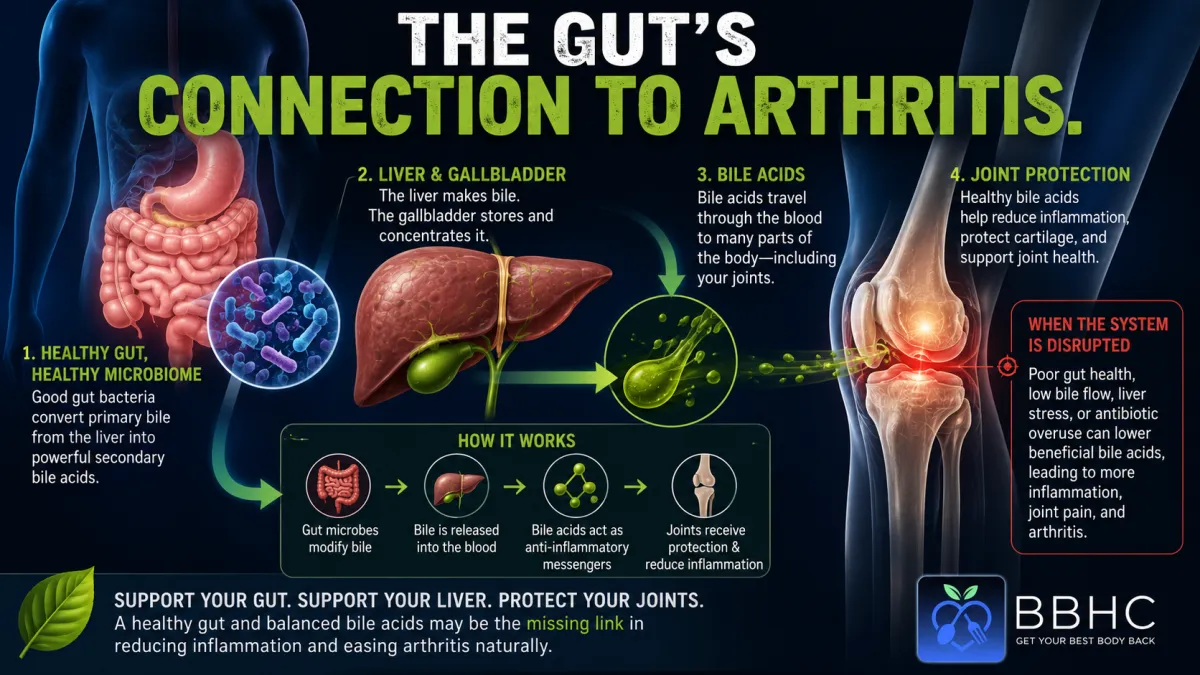
Certain bile compounds produced through the interaction between our gut microbes and the bile made by the liver appear to have powerful anti-inflammatory effects throughout the body. Some of these compounds circulate in the bloodstream and may help protect joint tissue from damage while reducing inflammatory activity within the joints themselves.
This may help explain why some people develop worsening joint problems after gallbladder removal, repeated courses of antibiotics, or prolonged digestive dysfunction. All of these factors can disrupt bile metabolism and alter the delicate balance of the gut microbiome.
One compound receiving increasing attention is TUDCA, a specialized bile salt derivative. Research suggests that TUDCA may help reduce endoplasmic reticulum stress while supporting the normal function of cartilage-producing cells. This is significant because healthy cartilage depends on efficient cellular repair and maintenance mechanisms. When these processes break down, inflammation and degeneration often follow.
At BBHC, we have long emphasized that digestive health influences nearly every aspect of wellness. The concept of a "gut-joint axis" is becoming increasingly recognized in scientific literature. The health of the microbiome directly influences the production of beneficial bile compounds, which in turn influence inflammation throughout the body.
This may also explain why many individuals notice dramatic improvements in joint pain when they clean up their diet and improve digestive function.
Vitamin K2 is another nutrient that deserves attention when discussing arthritis. While vitamin K1 is primarily known for its role in blood clotting, vitamin K2 helps regulate calcium placement within the body. Rather than allowing calcium to accumulate in soft tissues, K2 helps direct it toward bones and teeth where it belongs.
When vitamin K2 intake is inadequate, calcium may begin depositing in soft tissues, including blood vessels and joints. Over time, this can contribute to calcification, bone spurs, stiffness, and reduced joint mobility.
Rheumatoid arthritis presents a somewhat different challenge. Unlike osteoarthritis, which is often associated with wear, injury, and degeneration, rheumatoid arthritis is fundamentally an autoimmune condition. In this situation, the immune system mistakenly attacks the body's own tissues, particularly the joints.
One of the most important nutrients involved in immune regulation is vitamin D. Numerous studies have demonstrated that low vitamin D levels are associated with increased inflammation and autoimmune activity. From a BBHC perspective, maintaining optimal vitamin D status is one of the most important foundations for supporting immune balance and reducing inflammatory burden.
Vitamin D does not work in isolation. Magnesium, zinc, and vitamin K2 all play critical supporting roles, and deficiencies in these nutrients may limit the effectiveness of vitamin D within the body.
Dietary triggers are another major factor in arthritis and chronic joint pain. Certain foods appear capable of increasing inflammation directly, while others may do so indirectly through their effects on the gut microbiome.
Highly processed foods containing emulsifiers are one example. These additives are commonly used to improve texture and shelf life but may negatively affect beneficial gut bacteria. Since the microbiome contributes to the production of anti-inflammatory bile compounds, disruption of gut health may ultimately influence joint health as well.
Industrial seed oils are another concern. While much debate exists regarding dietary fats, heavily refined oils that have been repeatedly heated may generate harmful oxidation products. These compounds have been associated with inflammation, oxidative stress, and cellular damage.
Excessive alcohol consumption can also contribute to joint problems. Alcohol places stress on the liver, interferes with metabolic processes, and may increase inflammatory activity throughout the body. Beer may present an additional challenge for susceptible individuals because of its effects on uric acid metabolism and gout.
Modern highly processed wheat products may also be problematic for some people. Beyond their impact on blood sugar regulation, certain wheat components can influence gut permeability and inflammatory responses. For individuals who are sensitive, reducing exposure may significantly improve symptoms.
Sugar remains one of the most important contributors to chronic inflammation. Elevated blood glucose promotes the formation of advanced glycation end products, often referred to as AGEs. These compounds can damage tissues, increase oxidative stress, and accelerate degenerative processes within joints.
Fortunately, there are many foods that appear to support joint health.
Fermented foods such as sauerkraut, kefir, and traditionally cultured vegetables help nourish beneficial gut bacteria. A healthy microbiome supports the production of secondary bile compounds that may exert anti-inflammatory effects throughout the body.
Healthy fats from sources such as olive oil, avocados, wild-caught fish, grass-fed meat, butter, and cheese provide important nutrients while helping stimulate healthy bile production.
Foods rich in vitamin D and omega-3 fatty acids may further support inflammation control. Fatty fish, cod liver oil, and sensible sun exposure remain some of the best sources.
Sulfur-containing foods such as garlic, onions, broccoli, cauliflower, cabbage, and other cruciferous vegetables also deserve a place in any joint-supportive diet. Sulfur is an essential component of connective tissue and plays an important role in maintaining healthy cartilage.
Collagen-rich foods such as bone broth can provide additional support for connective tissue repair. Traditional diets often included far more collagen than modern diets, which tend to emphasize muscle meat while neglecting connective tissues.
At BBHC, our view is that arthritis should not simply be seen as a disease of aging joints. It is often the result of a much broader interaction between nutrition, gut health, liver function, inflammation, immunity, and lifestyle factors. By addressing these foundational systems rather than focusing solely on symptoms, many people may discover opportunities to significantly improve their quality of life.
The emerging science surrounding bile acids, the microbiome, vitamin D, vitamin K2, and inflammation reminds us that the body functions as an interconnected whole. When we support the gut, nourish the liver, optimize nutrient status, and remove inflammatory foods, we often create an environment where healing becomes possible.
Joint pain may begin in the joints, but the solution often starts much deeper.