
The Master Switchboard
Why Your Pituitary Gland Quietly Runs the Whole Show
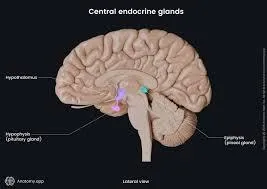
If there were ever a part of the human body that deserved more credit than it gets, it’s the pituitary gland. This tiny, pea-sized structure — tucked beneath the brain like a forgotten afterthought — is, in truth, the central command station for your entire endocrine system.
Most people assume the thyroid is the queen of hormones, or that the adrenal glands dictate how we feel from moment to moment. Others assume the brain itself is running the show. But when you look closely at what the pituitary controls, you realize something startling: if the pituitary falters, the entire hormonal universe collapses.
The attached BBHC document calls it exactly what it is: “the master gland.”
But its story is far more dramatic — and far more misunderstood — than the title suggests.
The Hidden CEO of Your Hormones
On page one of the document, the pituitary is described as the headquarters of hormonal activity, responsible for sending chemical “instructions” to nearly every other major gland.
Think of it as the electrical switchboard in an old telephone exchange. The wires, the connections, the coordination — everything routes through this one point.
Consider what it actually controls:
Your Thyroid
The pituitary decides how much hormone your thyroid produces by releasing TSH. When the pituitary misfires, thyroid output can drop even when the thyroid gland itself is perfectly healthy.
Your Adrenal Glands
Through ACTH, the pituitary dictates cortisol production — your stress, inflammation, blood sugar, blood pressure, and daily energy all depend on this signal.
Your Muscles, Bones, and Recovery
Growth hormone (GH), produced by the pituitary, influences muscle building, fat burning, bone strength, tissue repair, and metabolic health. A weak pituitary equals slow recovery and accelerated aging.
Your Reproductive System
Through LH and FSH, the pituitary governs estrogen, progesterone, testosterone, ovulation, and sperm production. Fertility and libido are often pituitary conversations, not reproductive organ failures.
Hydration & Electrolytes
ADH — the hormone that regulates water balance — comes from the pituitary. When it drops, you get constant thirst, excessive urination, and dehydration.
Temperature, Appetite, Sleep, Stress
The pituitary works side-by-side with the hypothalamus to track and adjust what your body needs in real time.
This gland is not simply important — it is the unseen conductor keeping your biological symphony in tune.
When the Switchboard Fails, The Body Misfires
The document outlines one unmistakable truth: when the pituitary goes offline, the symptoms explode through the entire body.
People often chase individual symptoms:
weight gain
fatigue
brain fog
anxiety
irregular cycles
low libido
insomnia
hair loss
dehydration
muscle weakness
Yet the real culprit may be the single gland coordinating all the signals.
For example:
Thyroid-like symptoms may appear even when thyroid labs look “normal” — because TSH is the root problem.
Adrenal issues are often misdiagnosed when ACTH miscommunication is the real trigger.
Reproductive irregularities often trace back to LH/FSH imbalance rather than ovarian or testicular dysfunction.
Water imbalance and leg cramps can stem from ADH irregularities, not electrolyte supplements or hydration mistakes.
As the document emphasizes, a dysfunctional pituitary rarely presents as a single problem. It shows up as dozens.
Stress: The Pituitary’s Silent Assassin
One of the most striking sections of the attached file details how stress destroys pituitary function.
When chronic emotional or physical stress hits, ACTH rises, cortisol rises, and eventually the system burns out. The pituitary becomes exhausted, nutrient-deficient, inflamed, and poorly coordinated.
Stress also:
blocks nutrient absorption (magnesium, zinc, B vitamins, iodine, omega-3s)
reduces blood flow to the brain
disrupts sleep cycles and growth hormone production
inflames the hypothalamus
No wonder stressed individuals feel “out of sync,” as the document describes.
Because they are out of sync — hormonally, metabolically, and neurologically.
The BBHC Model: Supporting the Master Gland Naturally
What makes the document especially powerful is its clear roadmap for restoring pituitary health using lifestyle, not pharmaceuticals.
Here’s the summarized methodology, presented throughout pages 3–7:
1. Lower chronic stress
Nature walks, breathing, sunlight, cutting caffeine, magnesium-rich foods, and adaptogens all reduce pituitary strain.
2. Protect deep sleep
Growth hormone peaks at night, and without it, repair halts.
3. Heal insulin resistance
Healthy keto, intermittent fasting, and removing sugar create metabolic calm for the pituitary.
4. Feed the gland proper nutrients
Iodine, zinc, B vitamins, vitamin E, omega-3 fats, magnesium — all essential.
5. Reduce toxicity and inflammation
Avoid seed oils, sugar, artificial sweeteners, MSG, plastics, fragrances, pesticides.
6. Support the liver
A clean liver ensures clean hormone signaling.
7. Hydrate deliberately
Electrolytes, sea salt, water-rich foods, and cutting caffeine allow ADH to normalize.
8. Restore gut health
Gut inflammation = pituitary confusion.
9. Eliminate endocrine disruptors
These chemicals “scramble the signal.”
10. Align spiritually and emotionally
The document highlights that internal fragmentation shows up physically — the mind directs the body, and the pituitary responds to that alignment.
The Bottom Line: Protect the Switchboard or Expect System Failure
The pituitary gland is not simply a hormone gland. It is the central regulator, the silent operator, the master switchboard controlling nearly every vital process in the human body. And as the attached document wisely concludes:
“When it falters, the entire body begins misfiring.”
The BBHC protocol offers a clear path back to balance:
✔ lower stress
✔ improve sleep
✔ stabilize insulin
✔ nourish deeply
✔ reduce toxins
✔ hydrate properly
✔ restore emotional and spiritual grounding
Do those consistently, and the body’s switchboard wakes back up — coordinating metabolism, hormones, energy, cognition, reproduction, hydration, and longevity with the precision it was designed for.
Your health doesn’t start with your thyroid or your adrenals.
It starts with the gland quietly running the whole system from behind the scenes.
And now you know exactly how to protect it.