
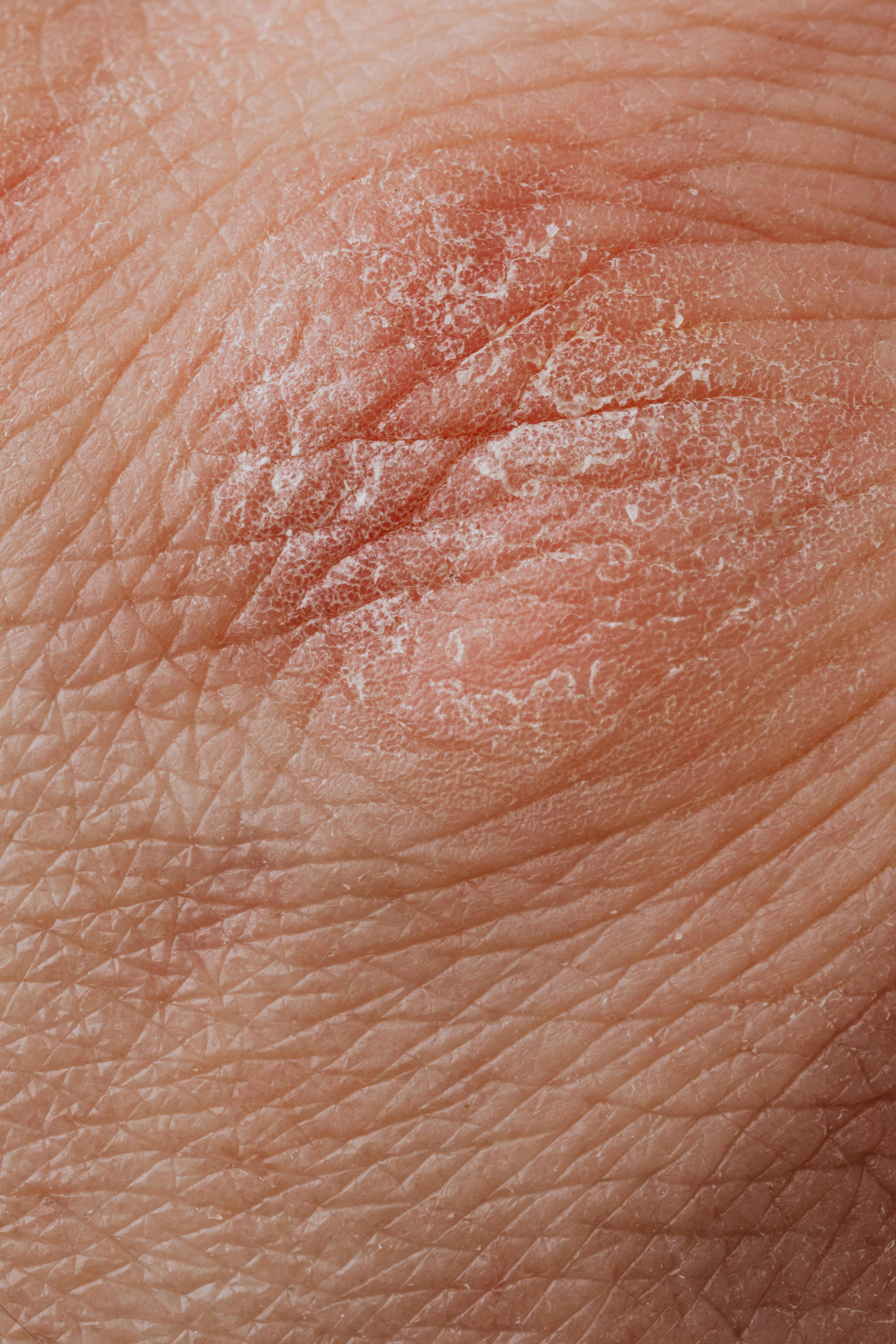
Psoriasis, the Gut, and a Missing Building Block
A New Angle on an Old Autoimmune Condition
I’m always looking for better, more logical ways to address chronic conditions—especially those that keep coming back despite treatment. Psoriasis is one of those conditions.
Before we go any further, a necessary disclaimer:
This is not a claim of a cure, and it’s not a replacement for medical care. Always consult your healthcare professional before trying anything new. What follows is information—something you can evaluate and test for yourself.
That said, this is an interesting and often overlooked piece of the psoriasis puzzle.
What is psoriasis, really?
Psoriasis is not just a skin problem.
At its core, psoriasis involves:
An accelerated growth rate of skin cells—up to 10 times faster than normal
Rapid cell buildup that forms dry, red, flaky plaques
A repeating cycle of buildup, shedding, and inflammation
But psoriasis rarely exists in isolation.
There is a strong association between psoriasis and:
Irritable bowel syndrome (IBS)
Inflammatory bowel disease (IBD)
Joint pain and inflammatory arthritis
Other autoimmune conditions
This matters, because most autoimmune conditions originate in the gut. When you view psoriasis through that lens, the pattern starts to make sense.
The gut–skin connection
If someone has chronic gut inflammation, the protective lining of the gut—the mucosal barrier—often breaks down.
That barrier is one of the immune system’s first lines of defense. When it’s compromised:
The immune system becomes overreactive
Food sensitivities increase
Autoimmune reactions become more likely
Psoriasis frequently shows up alongside this breakdown, which suggests that skin symptoms may be downstream effects of a deeper structural problem.
The missing structural component: protein + sugar tissues
Not all tissues in the body are built the same way.
Some are primarily:
Protein-based
Fat-based
Others—especially protective, elastic, and lubricated tissues—are made from a combination of protein and sugar.
These structures:
Hold water
Provide elasticity
Act as protective barriers
You see them in:
The lining of the colon
The sinuses
The skin
In the skin, these protein–sugar structures are critical for:
Hydration
Elasticity
Structural integrity of collagen and elastin
These compounds are called glycosaminoglycans, often abbreviated as GAGs.
Interestingly, about one-fifth of the sugar in your skin is used specifically to build these structures.
What goes wrong in psoriasis
In people with psoriasis, studies have found:
Elevated levels of GAG breakdown products in the urine
Antibodies directed against these structures
That tells us two important things:
1.These protective structures are breaking down
2.The immune system is attacking them
That’s classic autoimmune behavior.
What makes this even more compelling is that the same structural breakdown occurs in inflammatory bowel disease, where the gut’s mucous layer is damaged. Once that layer is gone, immune problems escalate quickly.
This overlap strongly suggests that psoriasis is not just excessive skin growth—it’s a failure to maintain and repair key structural tissues.
Enter N-acetyl-glucosamine (NAG)
This is where a potential remedy comes into focus.
N-acetyl-glucosamine (NAG) is a precursor, or building block, for glycosaminoglycans.
In simple terms:
GAGs are the finished structure
NAG is one of the raw materials needed to build them
Providing the body with NAG appears to support several key processes relevant to psoriasis.
What NAG may do
Based on available data and clinical use, NAG may:
1. Help regulate abnormal skin cell growth
Psoriasis involves uncontrolled, rapid cell division. NAG appears to play a role in growth regulation, potentially slowing this excessive turnover.
2. Support repair of gut and skin barriers
By supplying raw material for GAGs, NAG may help:
Restore the gut’s mucosal lining
Strengthen the structural support of the skin
This may explain why many people use NAG for:
Leaky gut
Bowel inflammation
Joint problems
And now, psoriasis
3. Calm autoimmune activity
NAG appears to have an immunomodulatory effect, helping to reduce overactivity of T-cells involved in autoimmune reactions.
In other words, it may help:
Reduce inflammation
Calm immune overreaction
Support tissue repair at the same time
That combination is rare—and important.
Dosage considerations
For those exploring this option, commonly suggested amounts range from:
1,000 to 2,000 mg per day, sometimes more
Taken consistently over time
This is not an overnight fix. Structural repair and immune calming take time—often weeks to months.
The bigger picture
Psoriasis is complex. There is no single cause and no single solution.
But this perspective adds something crucial:
Psoriasis may involve a failure to maintain key protein–sugar structures
That failure affects both the gut and the skin
Supporting those structures may help reduce immune overreaction and abnormal skin growth
For anyone with psoriasis—especially those with gut symptoms, joint pain, or other autoimmune issues—this is absolutely worth investigating.
Psoriasis is not just fast-growing skin cells.
It’s not just inflammation.
And it’s not just genetics.
It’s often a structural and immune problem rooted in the gut, with visible consequences on the skin. Supporting the body with the right building blocks may help it do what it was designed to do: repair, regulate, and protect.