
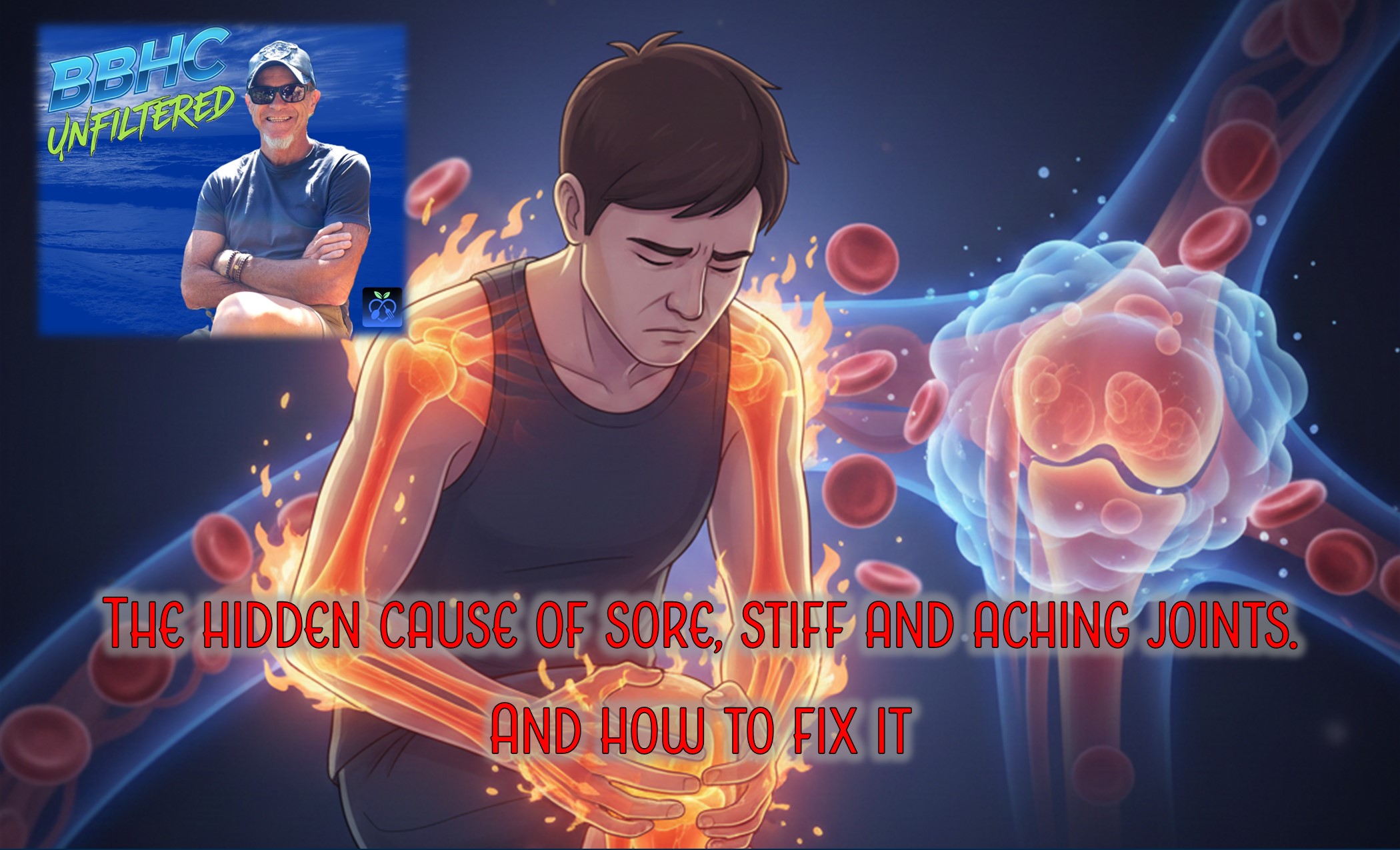
The Hidden Link Between High Blood Sugar and Achy Joints
We often think of insulin resistance as something that only affects our waistlines or our risk for diabetes. But have you ever woken up with stiff, swollen fingers or knees that feel "clogged" and wondered why?
The answer might not just be "getting older." It might be the way your body is handling sugar right down in your capillaries.
The Journey of Glucose
Normally, glucose (sugar) travels through your blood to reach the capillaries—the microscopic blood vessels that feed your tissues. From there, it’s supposed to exit the vessel and enter your cells to be used for energy or stored for later.
Your joints—made up of ligaments, tendons, cartilage, and bone—rely on this process to stay healthy. However, when things go wrong, your joints become the unintended storage locker for excess sugar.
When Joints Become "Insulin Resistant"
Just like muscle or liver cells, the cells in your joints can develop insulin resistance. When this happens, the glucose exits the capillaries but finds the "cellular doors" locked.
Since it has nowhere to go, the glucose just sits there in the spaces around your joints. This leads to two major problems:
1. The Water Magnet Effect
Glucose is "osmotic," meaning it attracts water. When high concentrations of sugar sit outside your cells, they drag water out with them. This creates:
Swelling: Fluid buildup around the joint.
Stiffness: A feeling of "fullness" or lack of mobility.
Pressure: Which often mimics the feeling of a chronic injury.
2. Glycosylation: The "Sticky" Protein Problem
While that sugar is sitting around, it starts to get into mischief. It begins sticking to the proteins that make up your tendons and cartilage. Scientists call this glycosylation.
Once sugar sticks to a protein, that protein becomes dysfunctional. It loses its elasticity and its ability to repair itself. To your body, these "sugared" proteins now look like broken parts or even foreign invaders.
The Immune System Strike
Your immune system is designed to "clean up" damaged tissue. When it spots these dysfunctional, glycosylated proteins in your joints, it goes on the attack. This response triggers:
Inflammatory Cytokines: Chemical signals that call for reinforcements.
Chronic Inflammation: A cycle of low-grade destruction that wears down your joints over time.
In a Nutshell
If your joints feel stiff and inflamed, it might be time to look at your metabolic health. By managing blood sugar and improving insulin sensitivity, you aren't just helping your heart—you’re giving your joints the chance to "de-clog" and move freely again.