
Banting Before Keto: How a Victorian Undertaker Accidentally Invented the Modern Low-Carb Diet
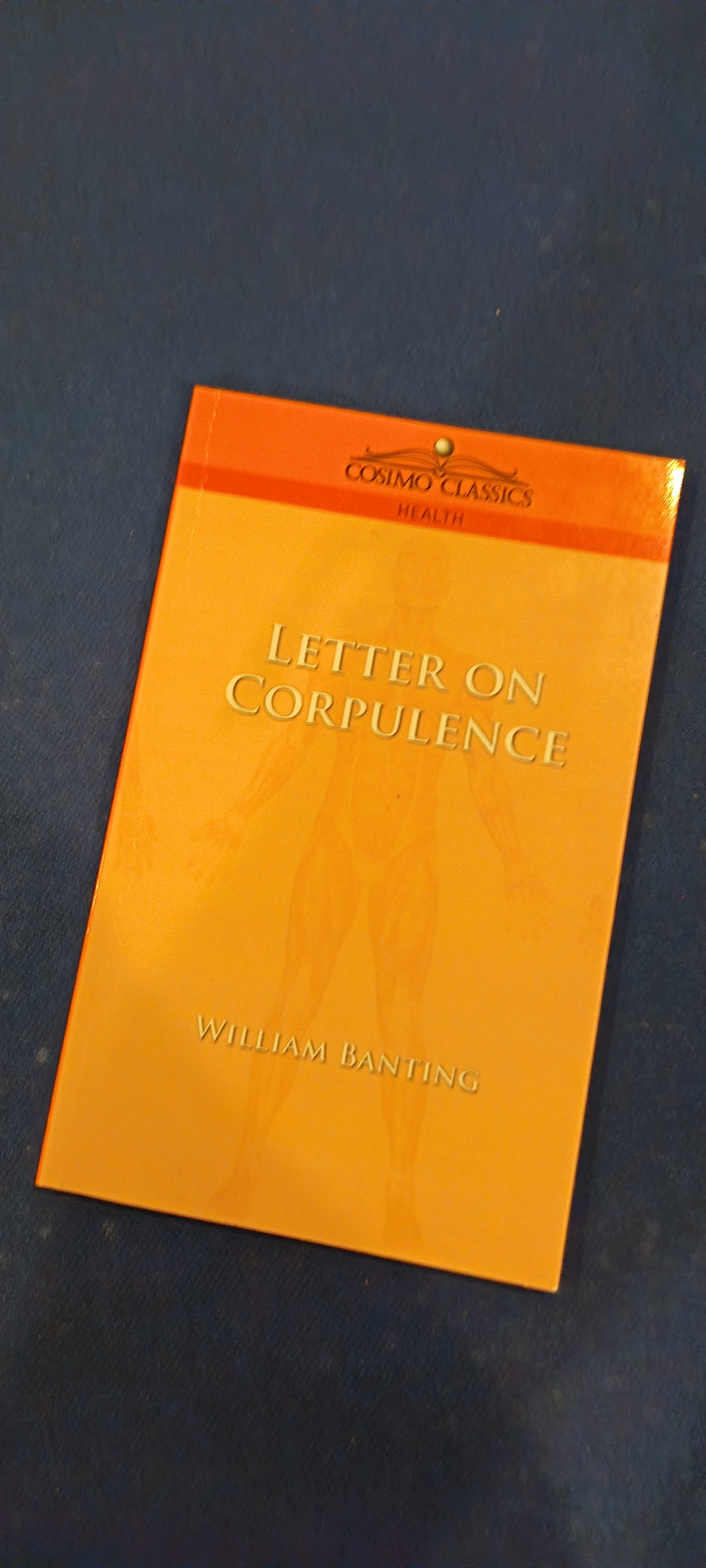
I first came across William Banting and A Letter on Corpulence in 2011, at a time when my own health was heading in the wrong direction despite doing what I was told was “right.” What struck me immediately was how familiar his experience felt—years of struggling, conventional advice failing, and then a dramatic turnaround once carbohydrates were removed. I went back to the original pamphlet, not modern interpretations, and followed the core principles exactly as Banting described them, adjusted for modern food availability. I didn’t count calories, I didn’t restrict fat, and I didn’t chase hunger. The results mirrored Banting’s almost disturbingly well: steady fat loss, improved energy, mental clarity, and a return to metabolic stability. That was the moment it became obvious to me that this wasn’t a fad or coincidence—it was physiology, rediscovered. Banting didn’t just inspire the modern ketogenic diet; he validated it through lived human evidence nearly 150 years before the term “keto” existed.
Long before keto was rebranded, monetized, and argued about on social media, it had a name already.
Banting.
And unlike today’s nutrition debates, this one didn’t start in a laboratory or a university department. It started with an overweight, chronically unwell man in Victorian England who was simply trying to save his own life.
Who Was William Banting?
William Banting (1796–1878) was a respected English undertaker—hardly a fringe character. He served aristocracy, moved in serious circles, and by his own admission had followed every accepted medical recommendation of the time to deal with obesity.
None of them worked.
By his mid-60s, Banting was:
Severely overweight
Short of breath
Unable to tie his shoes
Losing hearing
Chronically fatigued
In modern terms, Banting was metabolically broken.
His doctors told him to:
Eat less
Exercise more
Walk until exhausted
Row boats
Restrict fat
Sound familiar?
It failed—completely.
The Radical Intervention (for 1865)
Banting’s turning point came when he consulted Dr. William Harvey, who had been exposed to emerging ideas about carbohydrate restriction while studying diabetes treatment in Europe.
Harvey did something radical for the time.
He removed:
Bread
Sugar
Potatoes
Beer
And emphasized:
Meat
Fat
Vegetables
Wine and spirits (yes, really)
Within months, Banting lost 40–50 pounds, regained mobility, restored his hearing, and reversed decades of decline—without calorie counting.
“A Letter on Corpulence” (1865): The First Diet Bestseller
In 1865, Banting published a short pamphlet titled:
A Letter on Corpulence
He didn’t write it as a business venture. He wrote it because:
“I felt that I could not conscientiously withhold my experience from the public.”
The result?
It sold out immediately
It was translated into multiple languages
“To Bant” became a verb
Kings, nobles, and physicians adopted the diet
Obesity treatment globally shifted toward carbohydrate restriction
For nearly 70 years, Banting-style diets dominated obesity care.
Was Banting Just Eating Fewer Calories? No. And Here’s Why.
Modern critics love to claim:
“Banting was just on a 1,200-calorie diet.”
This is historically and metabolically false.
The errors:
Fat calories were miscounted or ignored
Alcohol calories were discounted
Body-fat metabolism was not understood
Ketosis had not yet been described
When carbohydrate intake drops:
Insulin falls
Fat oxidation increases
The body uses stored fat as fuel
Banting wasn’t starving.
He was switching fuel systems.
Calling Banting “low-calorie” is like calling a diesel engine “energy deficient” because it stopped using petrol.
Food Was Fundamentally Different in 1865
Another detail modern critics miss: the food supply.
In Banting’s era:
No seed oils
No refined sugar industry
No HFCS
No ultra-processed food
No industrial grains
No chemical preservatives
Meat came from animals raised on pasture. Vegetables were seasonal. Alcohol was often safer than water due to fermentation and distillation killing pathogens.
Ironically, the “crazy” part of Banting’s diet—wine and spirits—made sense in context.
Why Banting Worked When Everything Else Failed
Banting succeeded because his diet:
Lowered insulin
Eliminated refined carbohydrates
Restored metabolic flexibility
Allowed fat-based energy metabolism
These are exactly the same mechanisms targeted by:
Modern ketogenic diets
Low-carb therapeutic nutrition
Diabetes reversal protocols
The physiology hasn’t changed.
Only the marketing has.
So Why Did Banting Disappear in the 1930s?
Because nutrition science took a wrong turn.
By the early 20th century:
Calories became the obsession
Fat was blamed for heart disease
Insulin was discovered—and misused
Carbohydrates were framed as “necessary fuel”
Textbook authors (often writing solo monographs) retroactively reclassified Banting as a calorie-restricted diet—a gross misunderstanding that polluted the literature for decades.
Once that lie took hold, the entire field veered off course.
Banting Is the Father of Modern Keto—Whether Academia Likes It or Not
Strip away the buzzwords and what do you have?
Low carbohydrate intake
Fat as primary fuel
Protein for structure
Stable blood sugar
Appetite normalization
That is keto.
Banting didn’t name it. He lived it.
Final Thought: History Got It Right Before Science Got It Wrong
Banting’s story is uncomfortable because it exposes an inconvenient truth:
We understood metabolic health better in 1865 than we did for much of the 20th century.
The problem wasn’t Banting.
The problem was forgetting him.
And now, 160 years later, modern medicine is slowly—reluctantly—rediscovering what a Victorian undertaker figured out with no labs, no journals, and no funding.
Sometimes progress is just remembering what already worked.